
Harrow Disc Heat Treatment: How Quenching and Tempering Make Discs Last
Harrow disc heat treatment decides how long a disc lasts in the field. Two discs can look the same after painting, yet one wears out in a season and the other keeps its edge for much longer. This guide explains, in plain language, how disc blade manufacturing works in our factory, what quenching and tempering do, and how to check hardness before you buy.
Need a recommendation? Tell us your tractor power, soil and crop on WhatsApp +86 133 8469 2372 or and we will reply with a matching model.
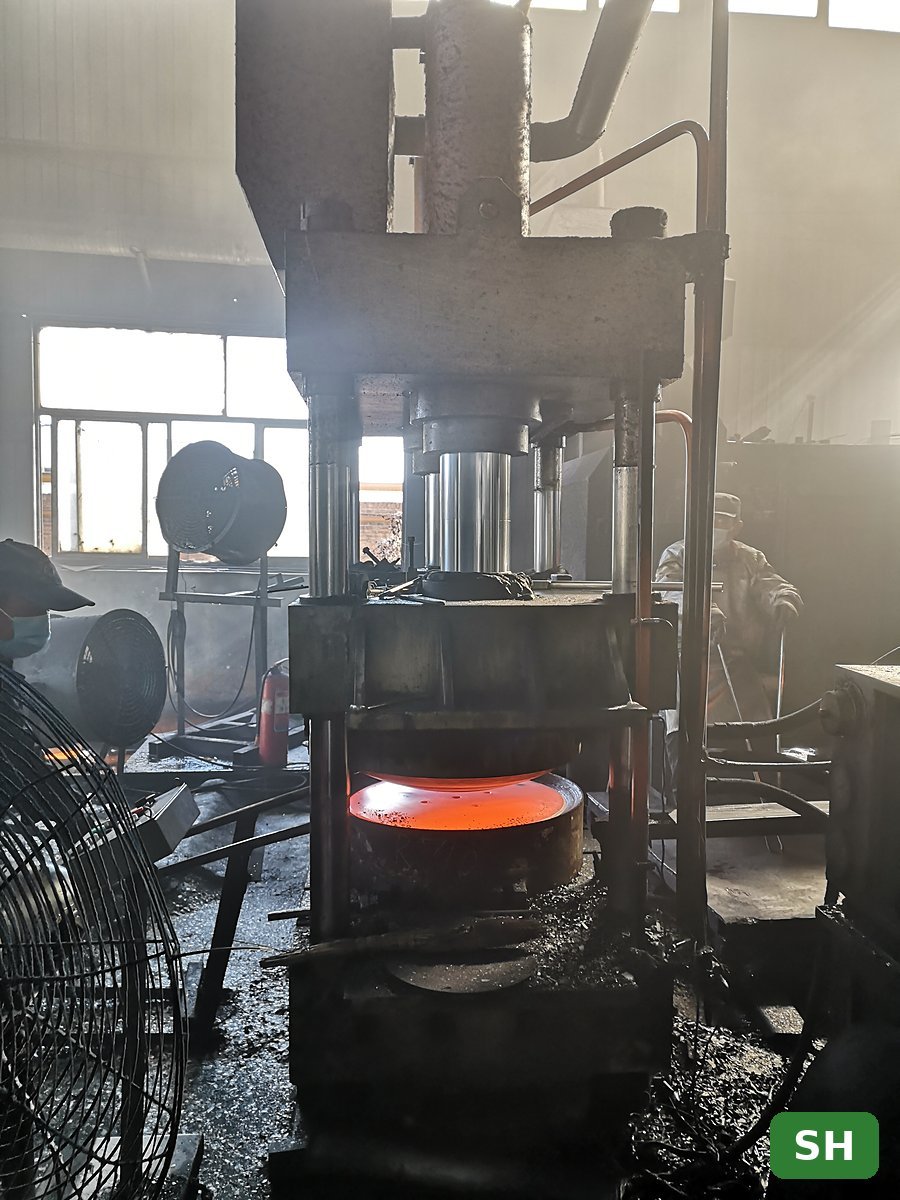
Harrow Disc Heat Treatment Step by Step
Every SH disc starts as flat steel plate, either 65Mn spring steel or 30MnB5 boron steel. The main steps are:
- Cutting the blank – a round blank is cut, with notches for a notched disc and the centre hole (square or round).
- Heating and forming – the hot blank is pressed into its concave dish shape.
- Quenching – the hot disc is cooled quickly so the steel becomes hard.
- Tempering – the disc is reheated to a lower temperature to reduce brittleness and set the final hardness.
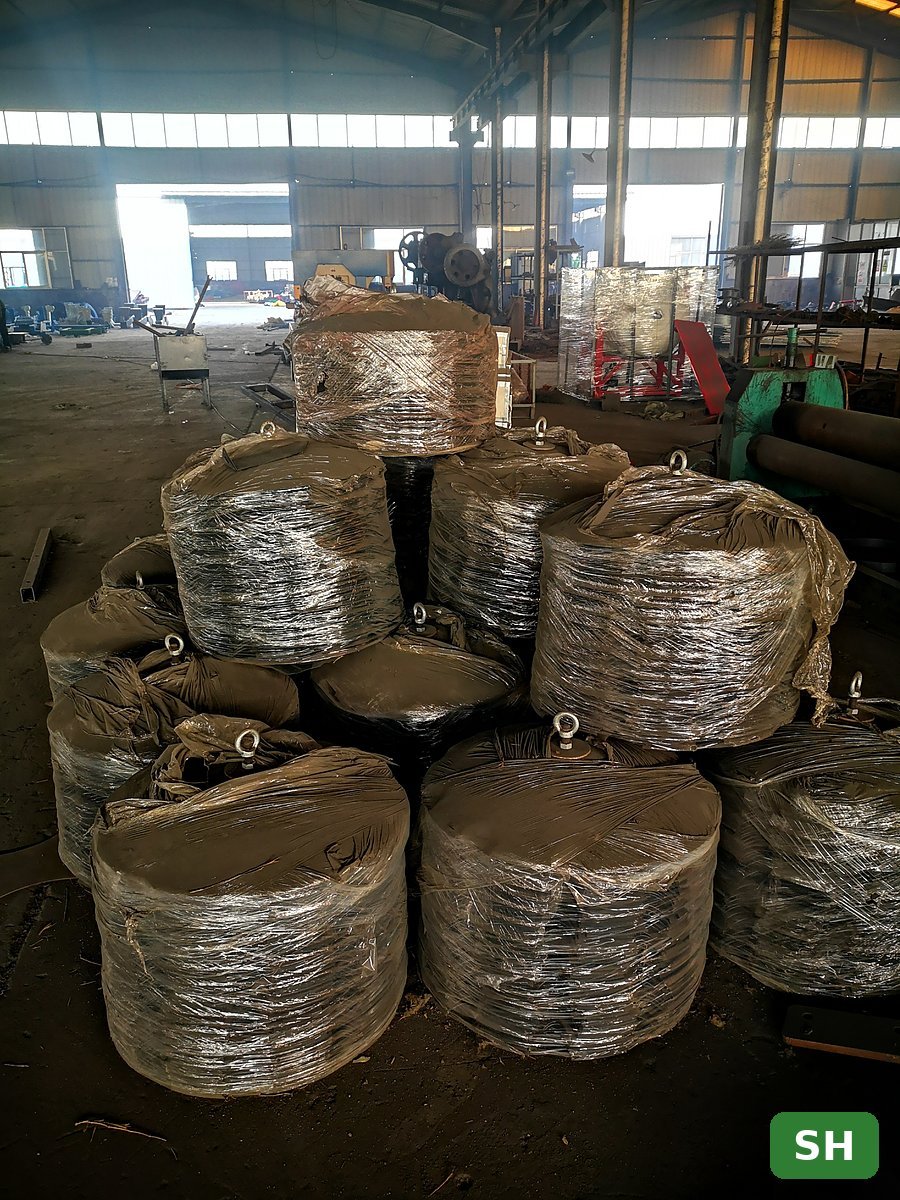
- Checking and finishing – hardness is checked, then the disc is painted or oiled against rust and packed.
Our standard target after quenching and tempering is HRC 38–44, for blades from 12 to 36 inches and 3 to 12 mm thick. Full specifications are on our harrow discs page.
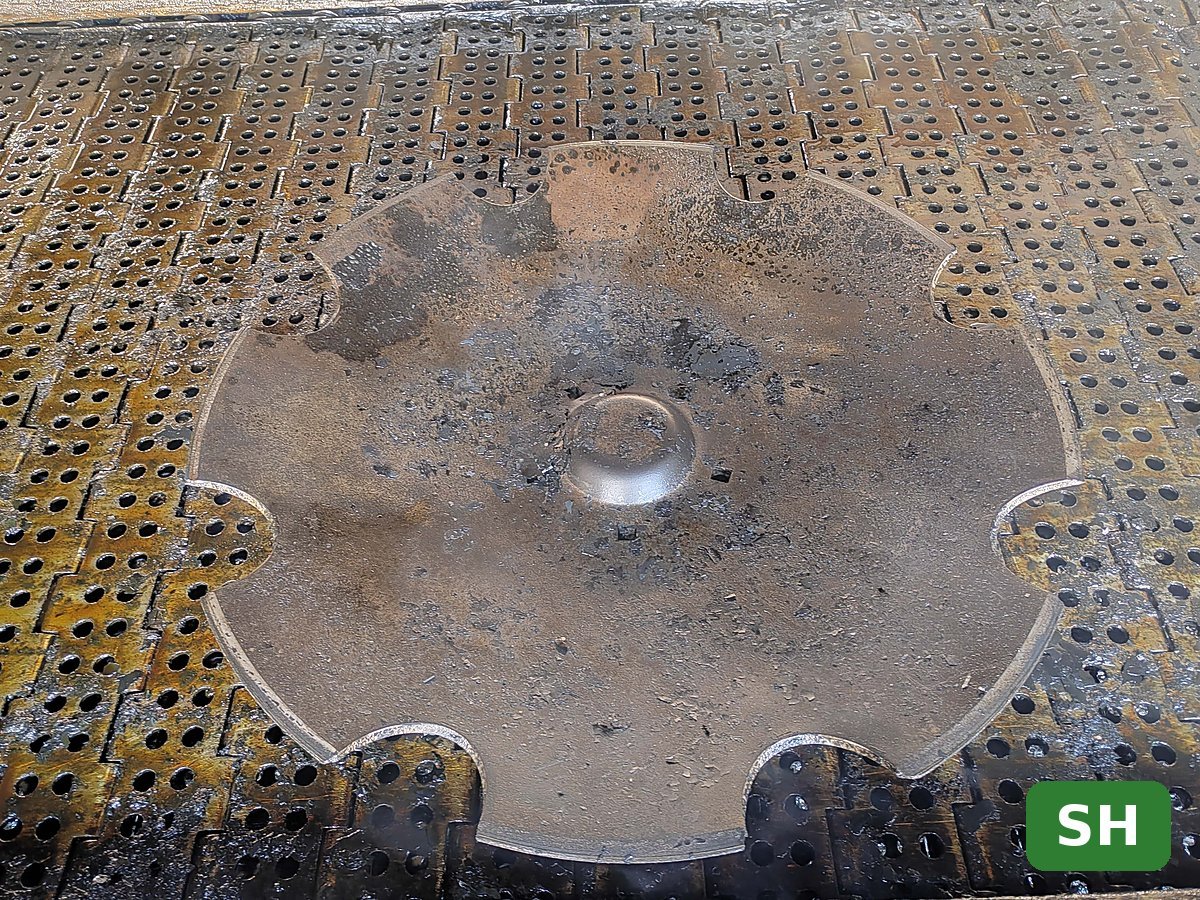
Why Harrow Disc Hardness Matters
Harrow disc hardness is a balance. A disc that is too soft wears fast, loses diameter and stops cutting at the right depth. A disc that is too hard can crack or chip when it hits stones or roots. The HRC 38–44 range gives a disc that resists wear but still has enough toughness to bend slightly under impact instead of breaking.
- Too soft: fast wear, edge rolls over, more passes and more fuel.
- Too hard: risk of cracks and broken notches in stony ground.
- Correct range: long life with a safe margin against impact.
65Mn or Boron Steel Disc: How Heat Treatment Differs
65Mn is a high-carbon manganese spring steel. It responds well to heat treatment and is economical, so it suits light and medium harrows and general farm work.
A boron steel disc (30MnB5) contains a small amount of boron. Boron lets the steel harden more deeply and evenly during quenching, so the hardness is more uniform right through the thickness. That is why boron steel discs usually last longer on heavy harrows and in sandy, abrasive or stony soil, where the whole thickness of the blade is worked hard. Compare both grades in our harrow disc blade sizes guide.
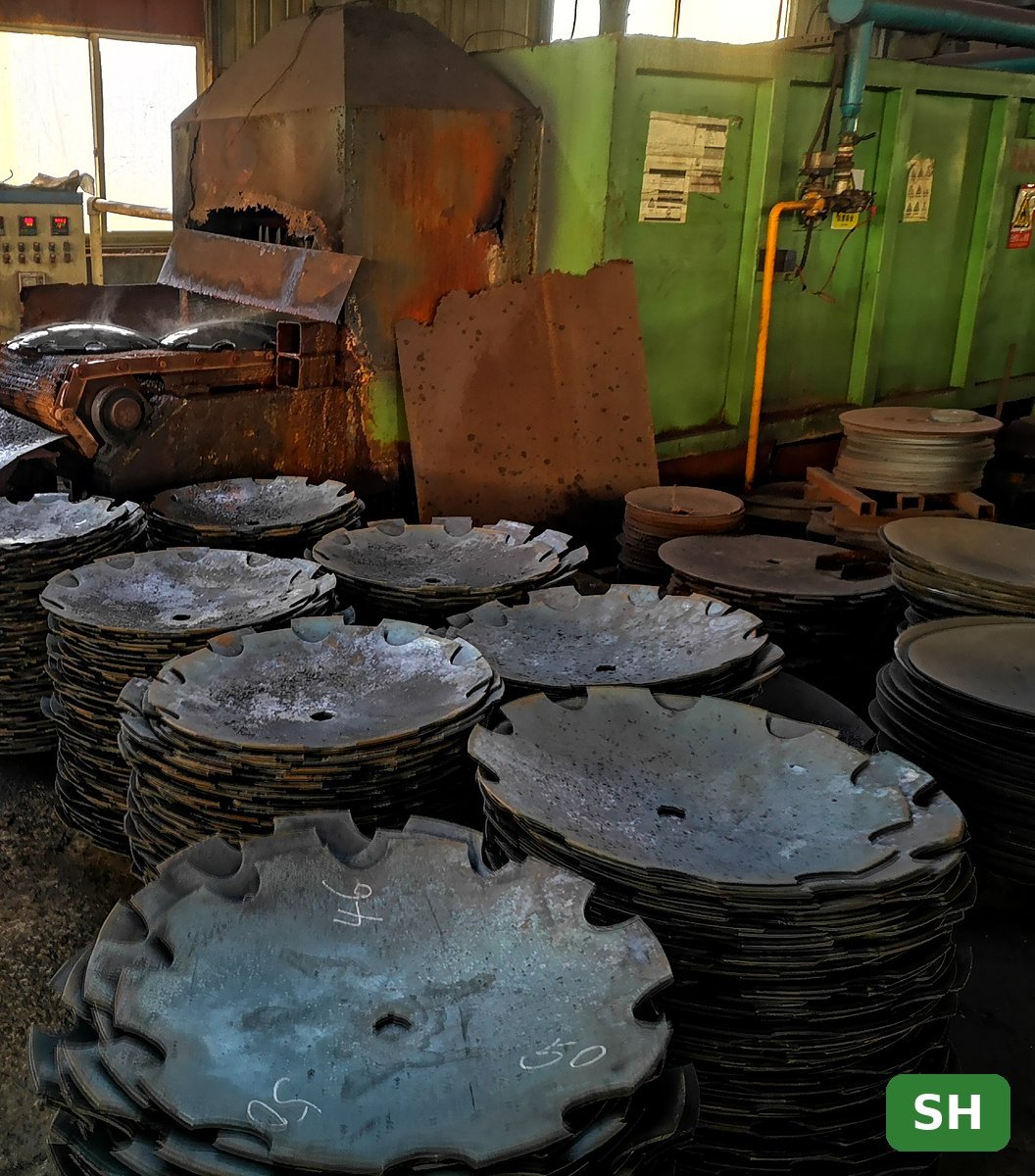
What a Quenched Disc Blade Looks Like
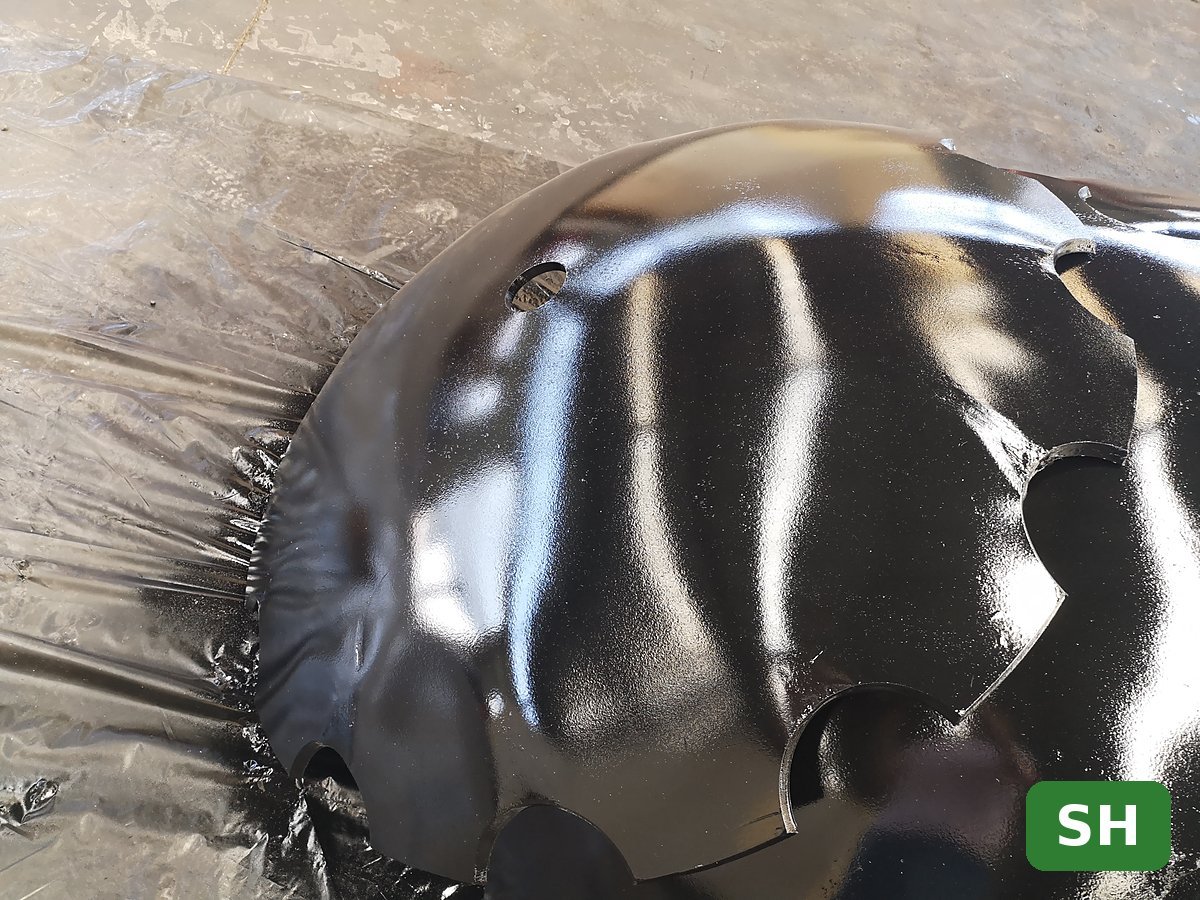
After quenching, discs come out with a dark, scaled surface. They are cleaned before painting. A well-treated batch has even colour and shape, no visible cracks around notches or the centre hole, and the same dish depth from disc to disc. Uneven dish depth makes a harrow gang run rough and wears bearings faster.
How Buyers Can Check Heat Treatment
- Ask for the hardness range in writing (HRC) and the steel grade.
- Request hardness test results for your batch. We check hardness on every batch.
- Inspect samples for cracks near notches and holes, and for warped or uneven discs.
- Check thickness and diameter with a calliper and tape against your order.
- Do a field trial on a small order before a full container, if you are a new dealer.
Good heat treatment is one of the simplest ways to cut cost per hectare, and reliable spare parts are a key part of sustainable agricultural mechanization for small and medium farms.
Matching Heat Treatment to Soil and Machine
There is no single perfect disc for every farm. In soft loam with little stone, a standard 65Mn disc in the right thickness gives long, economical service. In sandy soil, which acts like sandpaper on steel, a boron steel disc keeps its diameter longer because the whole section is hardened. In stony ground, toughness matters as much as hardness, so a well-tempered disc that can flex under impact is safer than an over-hardened one. For heavy offset and folding harrows working long days, we usually recommend 26-inch boron steel discs of 6–8 mm. Tell us your soil and harrow and we will suggest the grade and thickness; good disc blade manufacturing starts with choosing the right steel for the job, before any quenched disc blade leaves the furnace.
Common Mistakes When Buying Discs
- Comparing only price per piece instead of life per hectare.
- Buying discs with no stated hardness or steel grade.
- Using light 3–4 mm discs on a heavy harrow – thickness matters as much as hardness.
Want test data for your order? Send the disc size and steel grade on WhatsApp +86 133 8469 2372 or and we will share the hardness results for your batch.
FAQ
What hardness should a harrow disc have?
Our discs are quenched and tempered to HRC 38–44, which balances wear resistance and toughness.
Is a boron steel disc better than 65Mn?
For heavy harrows and abrasive or stony soil, boron steel usually lasts longer because it hardens more evenly through its thickness. 65Mn is economical for light and medium work.
Why do some discs crack?
Cracks usually come from hardness that is too high for the soil, poor tempering, or impact with large stones at high speed.
Can you heat-treat discs made to my drawing?
Yes. Discs made to drawing go through the same quenching, tempering and hardness checks.
Get a Quote
Send the diameter, thickness, steel grade, edge type, centre hole, quantity and destination port on WhatsApp +86 133 8469 2372. See all sizes on the harrow discs page, complete disc harrows, and our export and shipping options.
댓글
토론에 참여하려면 로그인해 주세요. 로그인 회원가입