
Mini Round Baler Guide: 9YK0850 vs 9YK0870 – Turn Loose Straw into Sellable Bales with an 18–75 HP Tractor
A mini round baler lets a small farm turn loose hay and straw into compact bales without buying a big tractor or a large square baler. If you farm with an 18 to 75 HP tractor, keep cattle, goats or sheep, or want to sell straw instead of burning it, this guide shows how the two mini round models compare and how to pick the right one.
Need a recommendation? Tell us your tractor power, soil and crop on WhatsApp +86 133 8469 2372 or and we will reply with a matching model.
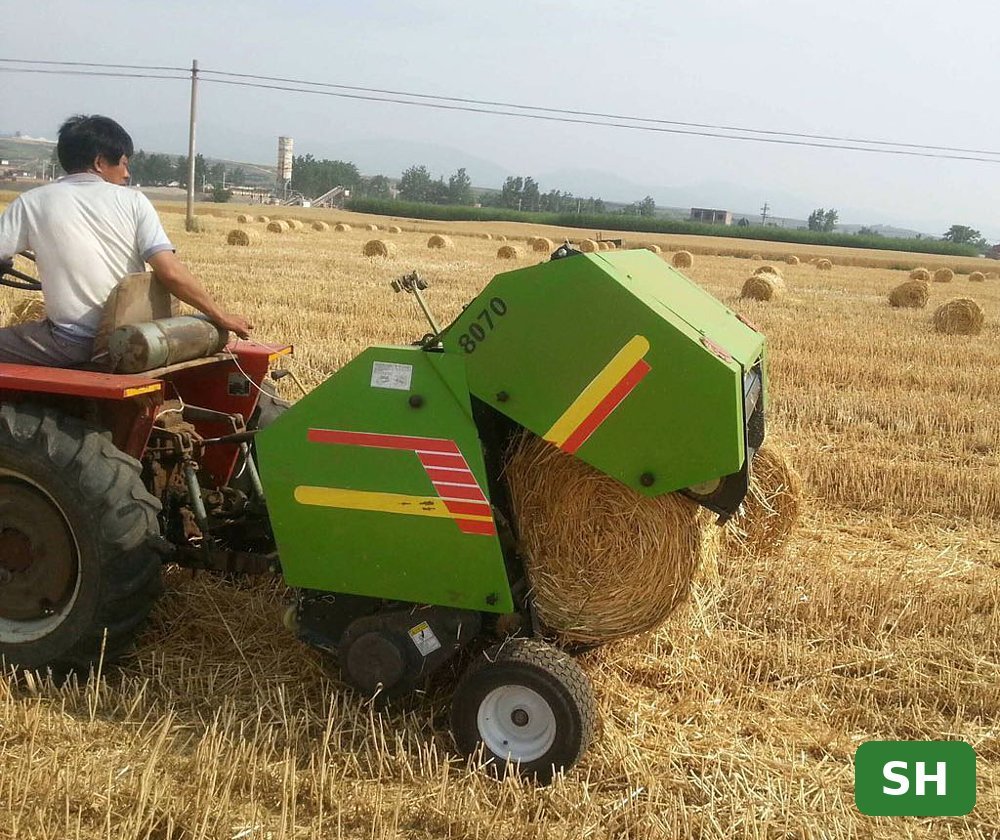
How a Mini Round Baler Works
The baler is pulled behind the tractor and driven by the PTO. A pickup with spring tines lifts the windrow off the ground and feeds it into a round chamber, where rollers turn the crop into a tight cylinder. When the bale reaches full size, it is wrapped with twine, the rear door opens and the bale rolls out onto the field. The whole cycle happens while you drive, so one person can bale alone.
Because the machine is light and compact, it suits small fields, hilly or narrow plots and farmers who already own a small tractor.
Mini Round Baler Models Compared
We build two mini round models, the 9YK series, plus two larger 9YF square models for bigger farms. All four are listed on our balers page.
| Model | Type | Collecting width (mm) | Bale size (mm) | Weight (kg) | Tractor (hp) |
|---|---|---|---|---|---|
| 9YK0850 | Mini round | 800 | φ500 × 700 | 415 | 18–50 |
| 9YK0870 | Mini round | 800 | φ600 × 700 | 440 | 25–75 |
| 9YF-1750 | Square | 1750 | 450 × 350, L 500–1200 | 1700 | 50–100 |
| 9YF-2200 | Square | 2200 | 470 × 360, L 500–1200 | 1800 | >60 |
The two mini models share the same 800 mm pickup. The difference is the bale: the 9YK0850 makes a φ500 × 700 mm bale and the 9YK0870 a larger φ600 × 700 mm bale, so it needs a little more power.

How to Choose: Tractor HP, Farm Size and Crop
- Tractor power: with 18–25 HP, choose the 9YK0850. From 25 HP up to 75 HP, either model fits; the 9YK0870 gives a bigger bale per stop. A round baler for 25 HP tractor work is the point where both models overlap.
- Farm size: mini models suit family farms, small dairies and contractors serving many small plots. If you bale large areas every day or sell hay by the truckload, look at the 9YF square models.
- Crop: the balers handle grass hay, alfalfa, wheat and rice straw and corn stalks. As a straw baler for small tractor owners, it turns residue into feed, bedding or income.
- Handling and storage: small round bales are easy to roll and lift by hand and shed rain better when stored outside. Square bales stack tighter in trucks and barns.
For a full comparison of both bale shapes, read our square baler vs round baler guide.
Field Tips for Dense, Even Bales
- Cut and dry well. Mow at the right growth stage with a mower, then turn and rake the crop so it dries evenly.
- Make even windrows. A straight, even windrow about as wide as the pickup gives the best bale shape. See hay rake vs tedder.
- Bale at the right moisture. Damp hay heats and moulds in storage; very dry hay loses leaves. Straw is usually ready soon after harvest.
- Drive steadily. With any mini hay baler, keep a constant speed and weave slightly across wide windrows so both ends of the bale fill.
- Clear bales quickly. Load bales onto a farm trailer before rain if they will be stored under cover.
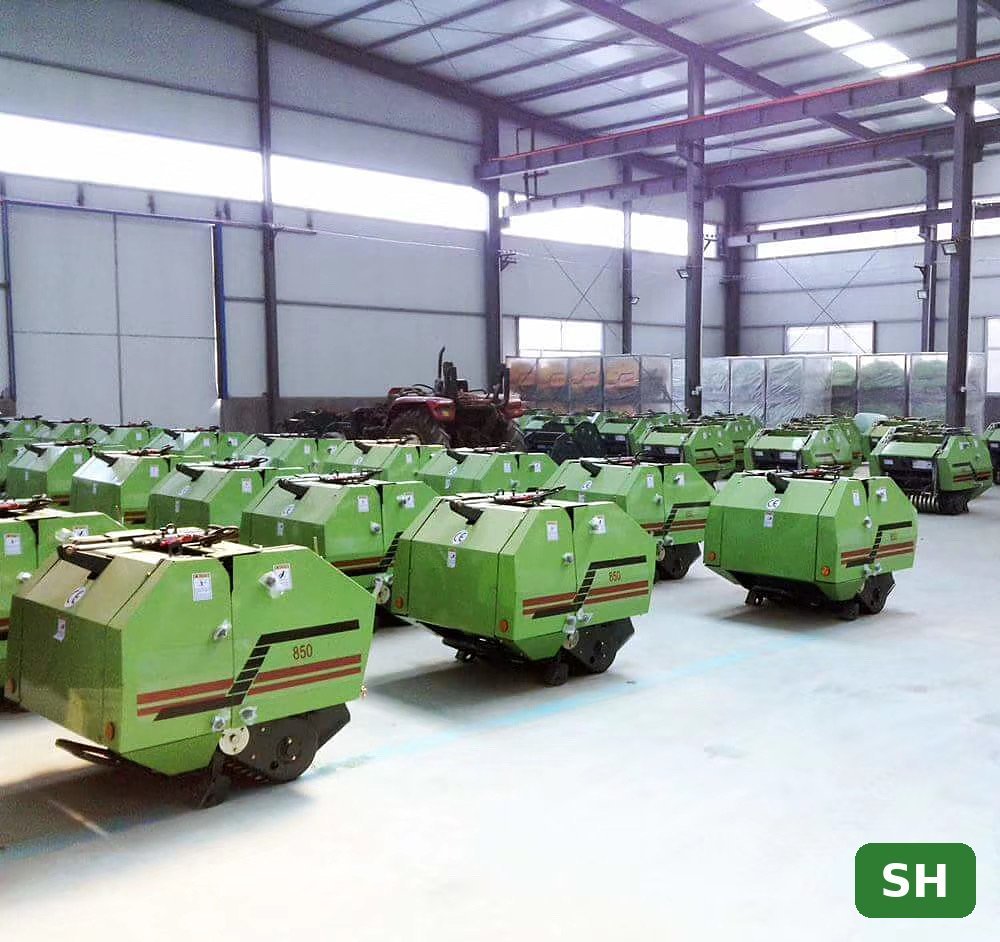
Mini Round Baler Maintenance and Spare Parts
- Check the twine path and tying unit before each season; most baling problems start there.
- Grease all points and check gearbox oil.
- Inspect pickup tines and replace broken ones.
- Check the shear bolt or slip clutch on the PTO drive and carry spare bolts.
- Use good-quality twine and store the baler under cover after blowing out dust and chaff.
Dealers should stock pickup tines, chains, bearings and shear bolts so customers can keep baling in the short harvest window.
Common Buying Mistakes
- Choosing by price alone. A cheap mini hay baler that does not match your tractor PTO or power will stop often.
- Forgetting the rest of the line. Without a mower and rake, even the best baler makes loose, uneven bales.
- Wrong bale size for the market. Ask buyers whether they want small round or square bales before ordering.
- No spare parts. Ship wear parts with the machine instead of waiting for air freight in the season.
Why Buy Direct from the Factory
Buying a mini round baler factory direct gives you one supplier for the baler, the mower and rake, and the tractor to pull them, in one shipment. We offer SH labelling, OEM options and export packing, and ship by sea, rail or air. See export and shipping.

Baling crop residue instead of burning it improves air quality and adds value. The FAO’s work on sustainable agricultural mechanization covers residue management and forage equipment.
Which baler fits your tractor? Send your tractor HP, crop and daily baling area on WhatsApp +86 133 8469 2372 or , or use our selection assistant.
Related guide: Straw baler guide: baling rice and wheat straw with small tractors
Mini Round Baler FAQ
What size bales does a mini round baler make?
The 9YK0850 makes bales of φ500 × 700 mm and the 9YK0870 makes bales of φ600 × 700 mm.
Can a small round baler for tractor use work with 20 HP?
Yes. The 9YK0850 is matched to 18–50 HP tractors, so a 20 HP tractor can drive it in normal hay and straw.
Can a mini hay baler bale rice straw and corn stalks?
Yes. It bales grass hay, alfalfa, wheat and rice straw, corn stalks and similar crops.
Is a mini round baler better than a square baler?
For small farms and small tractors, yes: it is light and needs little power. For large areas and selling hay by the truckload, a square baler has higher output.
Get a Quote
Send us the model (9YK0850 or 9YK0870), quantity, your tractor horsepower and your destination port. We will reply with a quotation and packing details. Contact us on WhatsApp +86 133 8469 2372 or see all models on our balers page.
Comments
Please log in to join the discussion. Log in Register