
Sickle Bar Mower vs Disc Mower: 5 Differences for Hay and Grass
Choosing between a sickle bar mower and a disc mower decides how fast you cut, how clean the hay is and how much power you need. A sickle bar mower is light and runs on small tractors; a disc mower cuts faster and handles heavy, lodged grass. This guide compares both, adds the rotary slasher for rough ground, and shows which SH model fits your tractor.
Need a recommendation? Tell us your tractor power, soil and crop on WhatsApp +86 133 8469 2372 or and we will reply with a matching model.

How a Sickle Bar Mower and a Disc Mower Cut
Reciprocating (sickle bar) mowers use a row of triangular knife sections that slide back and forth across fixed guards, like scissors. The cut is clean, the stems are not shredded, and very little power is needed. That is why our BSH series runs on tractors from only 15 to 25 hp.
Disc mowers have 4 to 8 discs that spin at high speed on a low cutter bar. Two small knives on each disc cut by impact. They need more power but work at 4–12 km/h and do not block easily in thick or wet grass.
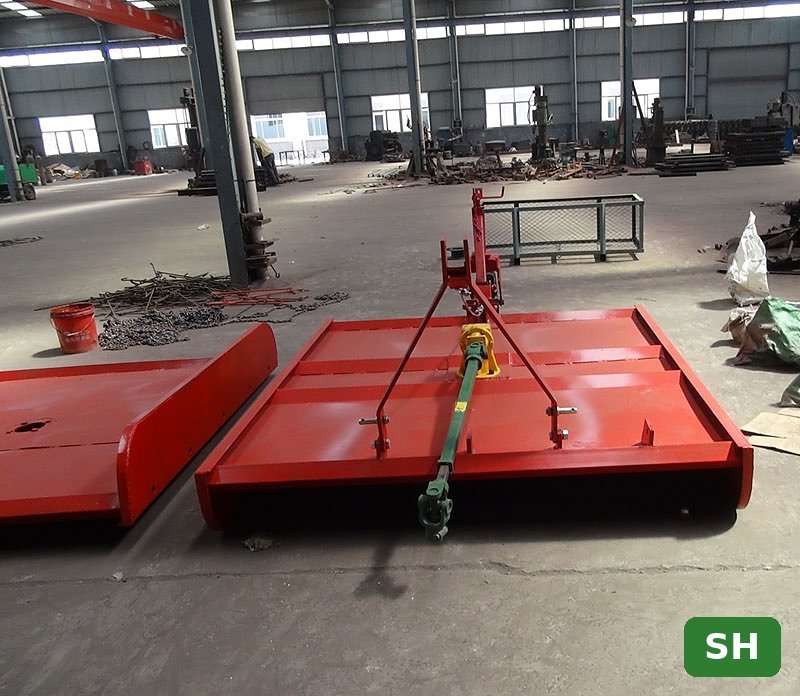
Rotary slashers (wheeled mowers) use heavy blades under a deck. They are for bush, tall weeds and rough pasture rather than hay.
Sickle Bar vs Disc Mower: 5 Key Differences
| Point | Sickle bar (BSH) | Multi-disc (MDSH) |
|---|---|---|
| Cutting width | 1.4–2.1 m | 1.67–3.20 m |
| Tractor power | 15–25 hp | 40–90 hp |
| Weight | 140–220 kg | 436–707 kg |
| Cutting action | Knife slides over guards | 4–8 discs, 2900 r/min shaft |
| Best for | Small fields, light hay, hillsides | Large fields, heavy or lodged grass |
In short: under 30 hp, choose a sickle bar mower; with 40 hp or more and a lot of hay to cut, the multi-disc model saves time. Both are PTO-driven at 540 r/min. See all models on our mowers page.
Which Tractor Mower Fits Your Tractor
| Model | Type | Width | Power (hp) |
|---|---|---|---|
| BSH-1.4 / 1.6 | Sickle bar, mounted | 1.4 / 1.6 m | 15 / 18 |
| BSH-1.8 / 2.1 | Sickle bar, mounted | 1.8 / 2.1 m | 20 / 25 |
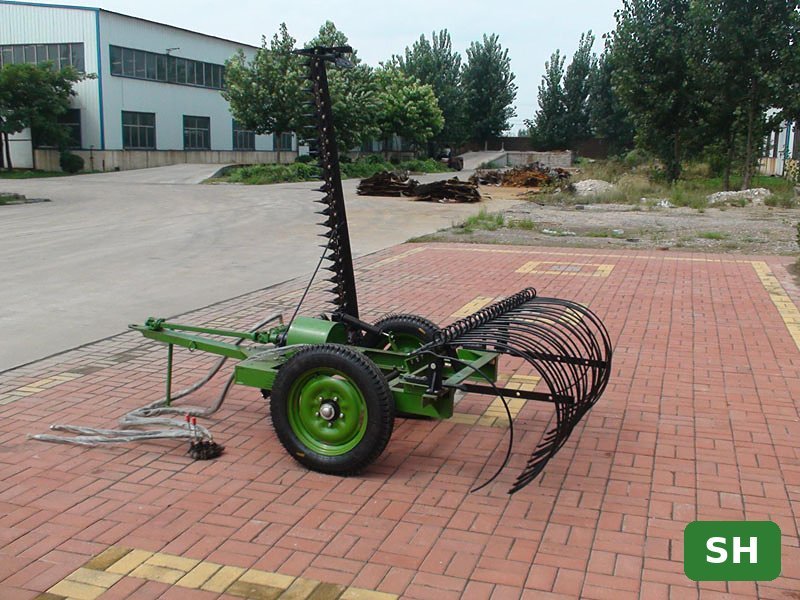
| BLSH-1.4 to 2.1 | Sickle bar with rake, trailed | 1.4–2.1 m | 18–30 |
| MDSH-167 / 205 | Multi-disc, 4 / 5 discs | 1.67 / 2.05 m | 45–55 / 40–55 |
| MDSH-245 / 286 | Multi-disc, 6 / 7 discs | 2.45 / 2.86 m | 50–70 / 55–70 |
| MDSH-320 | Multi-disc, 8 discs | 3.20 m | 60–90 |
| SLSH-130 to 210 | Rotary slasher, wheeled | 1.3–2.1 m | 20–75 |
The BLSH rake-mower is a good hay mower for small tractors: it cuts and gathers the crop into a row in one pass. For a full hay line, add a tedder or hay rake, and a baler from our balers range. Our square vs round baler comparison helps with the next step.

When to Choose a Rotary Slasher Instead
A slasher is not a hay tool. Choose one for orchards, road verges, field margins, sugarcane trash, bush and old pasture with stones or stumps. The SLSH series has gauge wheels to hold cutting height and covers 0.4–1.15 ha per hour, depending on model, for 20–75 hp tractors.
Setup and Field Tips
- Check that the tractor PTO runs at 540 r/min and use the correct PTO shaft length.
- Set stubble height: about 5–6 cm for sickle bar, a little higher in stony ground.
- On a multi-disc machine, let the cutter bar float; do not press it into the soil.
- Start slowly in heavy grass and raise speed once the cut is clean.
- Mow hay at early flowering for the best feed value, and only when rain is not expected.
Good forage practice matters as much as the machine. The FAO guide to sustainable agricultural mechanization stresses timely operations, and timely mowing is the key to good hay.
Maintenance and Spare Parts
- Sickle bar: sharpen knife sections daily in heavy work, check guard alignment and keep the wear plates tight.
- Multi-disc: check blades and blade bolts every day; replace worn blades in pairs on each disc to keep balance.
- Check the gearbox oil level and grease the PTO shaft.
- Clean grass from the cutter bar after work to prevent rust.
Order spare knife sections, guards or disc blades together with the machine. They are small and cheap to ship in the same crate.
Common Buying Mistakes
- Buying a wide multi-disc model for a 30 hp tractor – it will be underpowered.
- Using a sickle bar in stony bush land – the knives break; a slasher is better.
- Forgetting the rake and baler – cut hay must be turned and collected quickly.
Why Buy Direct from the Factory
Shenghang makes mowers, rakes, balers and tractors in our own factory in China. Buyers get factory-direct supply, SH labelling or OEM branding, export packing and shipping by sea, rail or air. Also read our drum mower buying guide.

Sickle bar or disc? Send us your tractor power, crop and field size on WhatsApp +86 133 8469 2372 or and we will recommend the right mower.
Related guide: Hay Rake vs Tedder: What Each Does and Which Your Farm Needs
Related guide: Disc Mower Sizes: 4 to 8 Discs for 40–90 HP Tractors
FAQ
What is the best hay mower for a small tractor?
For 15–25 hp, a sickle bar model such as the BSH-1.6 or BSH-1.8. The trailed BLSH rake-mower also cuts and rakes in one pass.
Is a disc mower better than a sickle bar mower?
A disc mower is faster and blocks less in heavy grass, but needs 40–90 hp. A sickle bar uses less power and gives a clean, scissor-like cut.
What is the difference between a tractor mower and a rotary slasher?
Hay mowers cut grass cleanly for feed. A slasher chops bush, weeds and rough pasture and is not meant for hay.
Can a mower be shipped with a tractor in one container?
Yes. Mowers are compact and are often packed with a tractor or other implements.
Get a Quote
Send us the model, quantity, your tractor horsepower and destination port on WhatsApp +86 133 8469 2372, or compare all models on the mowers page. The selection assistant can also help.
Comments
Please log in to join the discussion. Log in Register