
How to Calibrate a Fertilizer Spreader in 4 Steps
A fertilizer spreader that is not calibrated can put on far too much fertilizer in one strip and far too little in the next. The result is wasted money, uneven crops and, in the worst cases, burnt plants or nutrient run-off. Calibrating a tractor fertilizer spreader takes less than an hour and should be done for every new product and every new season. This fertilizer spreader calibration guide explains each step and how to choose the right spreader for your farm.
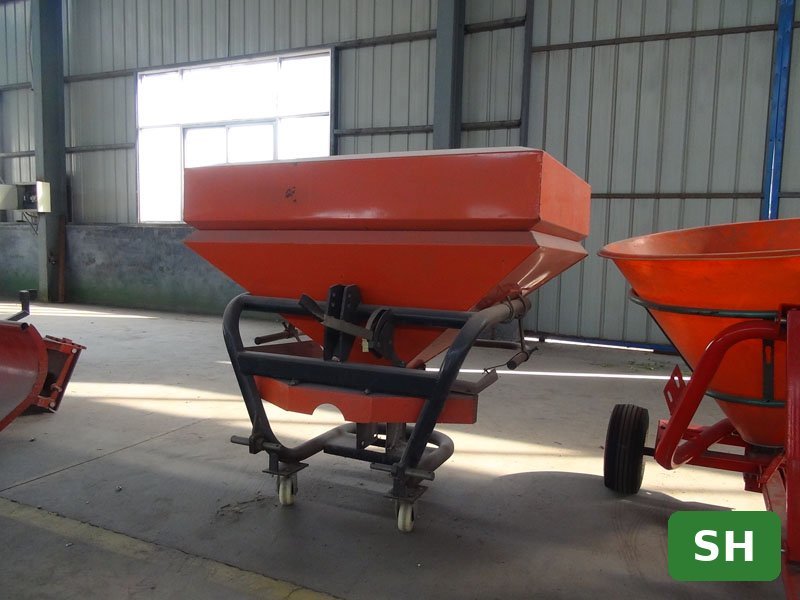
Which Spreader Do You Have?
| Series | Type | Hopper capacity | Notes |
|---|---|---|---|
| SSH | Single-disc, three-point mounted | 400–1000 L | Stainless steel hopper available |
| DSH | Double-disc, three-point mounted | 800–1500 L | Wide, even spreading on large fields |
| CSH | Round conical hopper, rear three-point mounted | 200–300 L | 12–50 hp tractors, 8–10 m working radius, 10–15 ha/h, 5–8 km/h |
All three spread granular fertilizer, seed and other granular material. Full details are on our spreaders page.
What You Need for Fertilizer Spreader Calibration
- A bucket or tarpaulin and a scale.
- A tape measure and some marker sticks.
- The fertilizer you will actually use – different products flow and throw differently.
- Your target rate in kg per hectare.
Step 1: Measure the Bout Width
The bout width is the distance between the centre lines of two neighbouring passes. Spread a short run on a flat area, then lay out a line of trays or simply observe where granules land on a hard surface. The useful bout width is usually less than the full throwing width, because the edges get only a thin cover and must overlap with the next pass. For the CSH series, start from the 8–10 m working radius and check it in the field.
Step 2: Find the Flow Rate
- Fill the hopper with a known weight of fertilizer.
- Set the opening to a middle setting and the PTO to its normal speed.
- Drive a measured distance – for example 100 m – at your normal working speed.
- Weigh what is left in the hopper. The difference is what was spread.
Step 3: Calculate the Spreader Rate
Area covered (ha) = distance (m) × bout width (m) ÷ 10,000.
Rate (kg/ha) = fertilizer used (kg) ÷ area (ha).
Example: you drive 100 m with a 10 m bout width – that is 0.1 ha. If 25 kg was used, the rate is 250 kg/ha. If your target is 200 kg/ha, close the opening slightly and test again.
Step 4: Check the Pattern
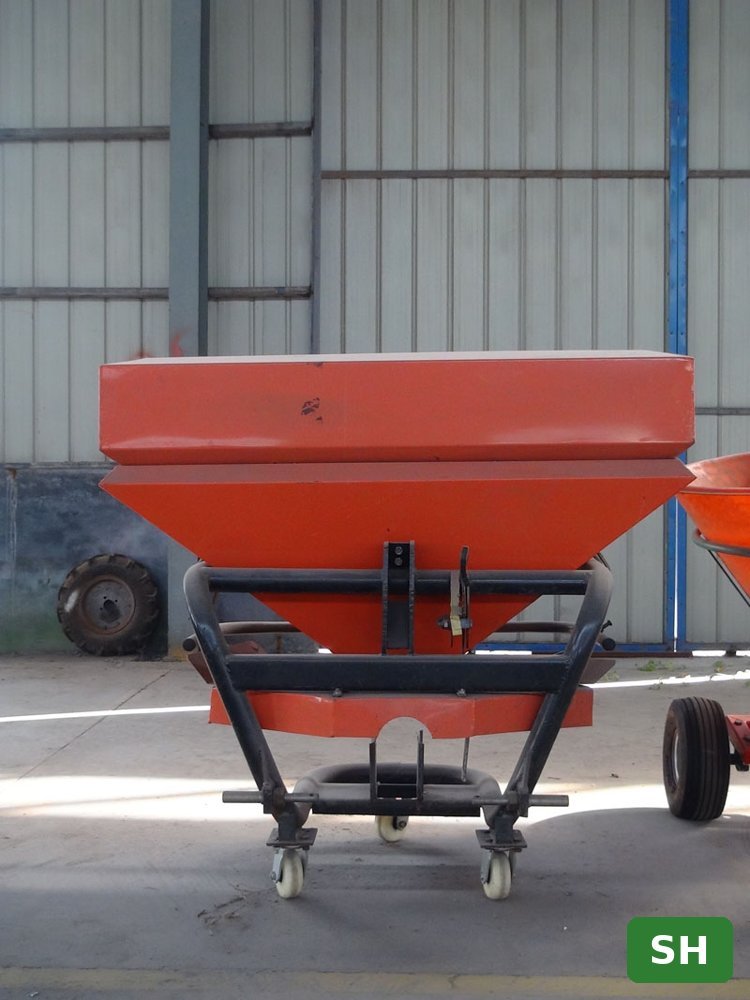
An accurate spreader rate is no good if the spread pattern is lopsided. Look for heavy strips behind the tractor or on one side. Common causes are a spreader that is not level, a worn or bent spinner vane, or a PTO speed that is too low or too high. Level the spreader with the top link and lift arms, and keep the PTO at a steady speed.
Single-Disc or Double-Disc?
A single-disc spreader is simple, light and affordable, ideal for small and medium farms. A double-disc spreader throws a wider, more even pattern and carries more, so it suits larger fields. For small tractors from 12 to 50 hp, the round-hopper CSH is a compact, easy 3 point fertilizer spreader. For the difference between granular spreaders and manure wagons, see manure spreader vs fertilizer spreader.
After Spreading
Fertilizer is corrosive. Empty the hopper, wash the spreader with water, dry it and oil the moving parts after every use – especially if you chose a painted steel rather than a stainless steel hopper.
Applying the right amount of fertilizer in the right place – the goal of fertilizer spreader calibration – is a key part of the FAO’s work on sustainable agricultural mechanization.
Not sure which model fits your tractor? Use our selection assistant, message us on WhatsApp +86 133 8469 2372 or .
Related guide: Boom Sprayer Calibration in 5 Steps: Litres per Hectare Made Simple
FAQ
How often should I calibrate my fertilizer spreader?
Repeat fertilizer spreader calibration for every new fertilizer product, at the start of each season, and whenever the spread looks uneven.
Why does the rate change with a new fertilizer?
Granule size, density and moisture all affect how fast fertilizer flows and how far it is thrown.
Which spreader suits a 30 hp tractor?
The CSH round-hopper spreader is designed for 12–50 hp tractors; a smaller SSH single-disc model is another option.
Get a Quote
Send us your tractor HP, field size and the material you spread. Compare all models on our spreaders page.
Maoni
Tafadhali ingia ili ushiriki mjadala. Ingia Jisajili