
How to Operate a Walking Tractor Safely: Start, Steer and Work
A walking tractor (two-wheel tractor or power tiller) is one of the most useful machines a small farm can own, but it is also a machine that needs skill to handle. The operator walks behind it, steers it by hand and controls a powerful diesel engine and rotating implements at close range. This guide explains how to operate a walking tractor safely and efficiently – from the first start of the day to turning at the headland, working on slopes and driving on the road.
Before You Start: 5 Quick Checks
- Oil and water: check the engine oil level and, on water-cooled engines, fill the water tank.
- Fuel: use clean diesel and keep the tank cap closed.
- Tyres and wheels: look for damage and check that wheel nuts are tight.
- Implement: check that the hitch pin and safety clip are in place and that blades, shares or discs are not loose.
- Area: make sure no people, children or animals are close.
For the full care routine, see our walking tractor maintenance checklist.

Starting the Engine
SH walking tractors are available with hand-crank or electric start. Before starting, put the gear lever in neutral and disengage the clutch and the PTO. With a hand crank, hold the handle with your thumb on the same side as your fingers, and let go as soon as the engine fires – never wrap your thumb around the handle. With electric start, do not run the starter for more than a few seconds at a time. Let the engine warm up at low speed before putting it to work.
Moving Off and Steering
- Select the gear with the engine at low speed and the clutch disengaged, then release the clutch smoothly.
- Use the steering clutches to turn: squeezing the left steering clutch lever turns the tractor to the left, the right lever to the right. Use them gently – a sharp pull on one side can swing the tractor round quickly.
- Keep both hands on the handlebars and walk at the side of the handlebars, not directly behind a rotating implement.
- Use low gears for heavy work and on uneven ground.
Working in the Field
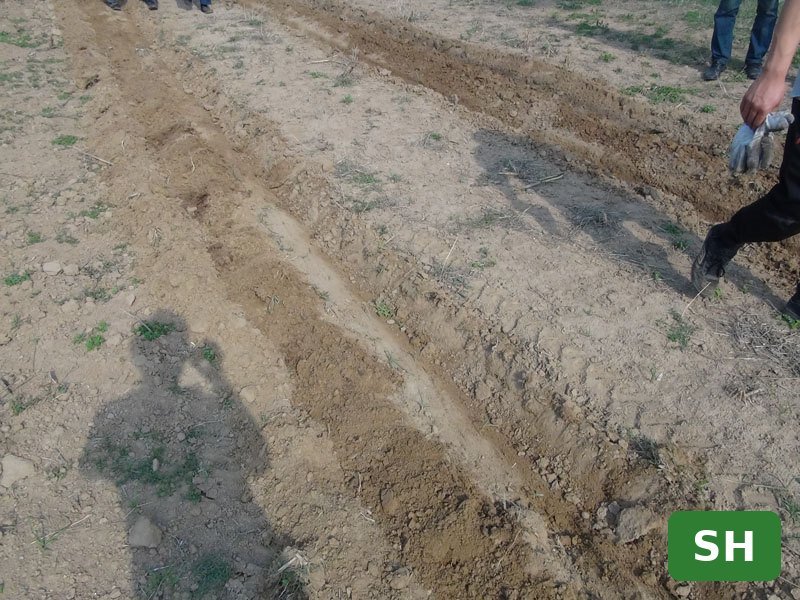
For ploughing and tilling, start along the edge of the field and work in long, straight passes to keep the number of turns low. At the headland, slow down, raise or disengage the implement, turn, then lower it again. Check the result after the first pass – depth, width and straightness – and adjust before working the whole field.
Working on Slopes
- Work across a gentle slope rather than straight up and down where possible, and keep to low gears.
- Avoid steep slopes, wet banks and the edges of ditches.
- Never disengage the clutch to coast downhill.
- If the tractor starts to tip, let go of the handlebars and step away – do not try to hold it.
Driving With a Trailer or Seat
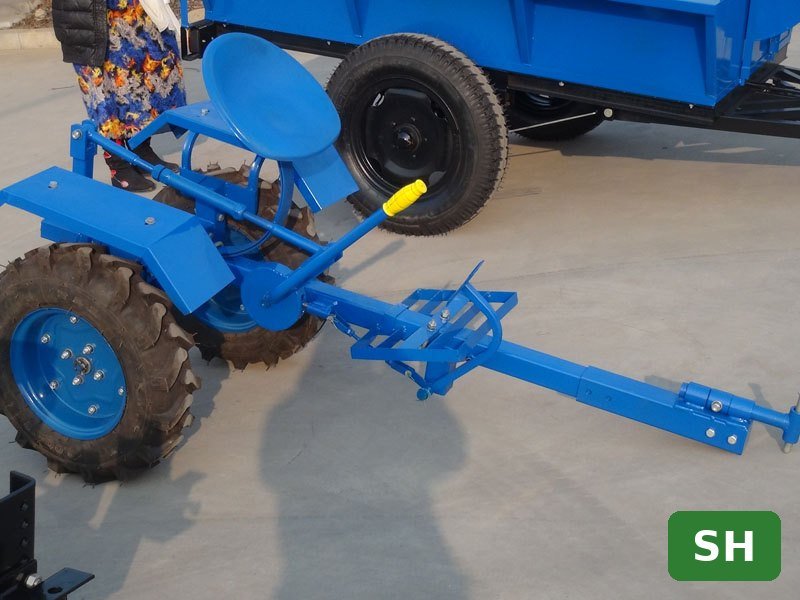
With a walking tractor trailer, the operator rides on the seat and the tractor behaves differently from walking work. Load the trailer evenly, keep within its rated load, drive slowly on bends and slopes, and use the brakes early. If you drive on public roads, follow local rules on lights, reflectors and licensing.
Common Operator Mistakes
| Mistake | Risk | Better practice |
|---|---|---|
| Changing gear at high engine speed | Gear damage, sudden movement | Slow the engine and use the clutch |
| Standing behind a rotary tiller | Injury from blades or thrown stones | Walk at the side of the handlebars |
| Turning sharply with the implement in the ground | Bent implement, tractor tipping | Lift or disengage before turning |
| Clearing blockages with the engine running | Serious hand injury | Stop the engine first |
After Work
Disengage the implement, let the engine idle for a minute, then stop it. Clean soil and plant material from the implement and the tractor, check for loose bolts and park on level ground. Safe operation and good training are central to the FAO’s work on sustainable agricultural mechanization.
Not sure it fits your walking tractor? Message us on WhatsApp +86 133 8469 2372 or .
FAQ
How do you turn a walking tractor?
Use the steering clutch lever on the side you want to turn towards, gently, with the implement lifted or disengaged.
Is electric start better than hand crank?
Electric start is easier, especially for larger engines; hand crank needs no battery. SH walking tractors are offered with both.
Can a beginner use a walking tractor?
Yes, with training. Start on flat, open ground with a light implement before moving to heavy work or slopes.
Get a Quote
Send us your farm size, soil type and the jobs you need to do. Compare models in our walking tractor buying guide and on our walking tractors page.
टिप्पणियाँ
चर्चा में भाग लेने के लिए कृपया लॉग इन करें। लॉग इन रजिस्टर करें