
How to Import Farm Machinery from China: 8 Steps
Buying farm machinery directly from a manufacturer in China can save a dealer or a large farm a great deal of money – but only if the order is planned well. Importers who skip steps often end up with the wrong model, surprise costs at the port or missing spare parts. This guide walks through how to import agricultural machinery from China, from defining what you need to clearing customs at home.
Step 1: Define Exactly What You Need
Start with your farming conditions, not with a catalogue. Write down:
- The tractor power your customers or your farm actually use.
- Soil type – sandy, loam, heavy clay, stony or wet paddy.
- Main crops and the jobs to be done: ploughing, harrowing, planting, spraying, harvesting, transport.
- Hitch type and PTO speed of the tractors that will pull the implements.
A supplier can only recommend the right model if you share this information. Our tractor horsepower guide helps match implement size to tractor power.
Step 2: Check Your Import Rules First
Before you order, ask your customs broker or the agriculture ministry in your country:
- Which HS codes apply to the machines, and what import duty and VAT are charged.
- Whether tractors need type approval, registration or emissions certificates.
- Whether a certificate of origin can reduce duty under a trade agreement.
- Rules for wooden packaging – most countries require ISPM 15 treated wood.
Rules change, so confirm them for every new product line.
Step 3: Request a Clear Quotation
A useful quotation states the exact model, the specification, the quantity, the Incoterm and the delivery time. Compare quotations on the same basis:
| Incoterm | What the seller covers | What you cover |
|---|---|---|
| EXW | Goods ready at the factory | Inland transport, export clearance, freight, insurance |
| FOB | Goods loaded on the ship at the Chinese port | Sea freight, insurance, destination costs |
| CFR | Goods plus sea freight to your port | Insurance, unloading and destination costs |
| CIF | Goods, sea freight and insurance to your port | Unloading, customs and inland delivery |
Whatever the Incoterm, you still pay duties, port charges and inland transport at destination, so add these to compare true landed cost.
Step 4: Plan the Container
Machinery is shipped in 20 ft or 40 ft containers, or on flat racks for very large items. Many implements ship partly disassembled to fit more units. Ask the supplier how many units fit, which parts will be removed and how they are packed. Our article on farm machinery export packing shows what good packing looks like.
Step 5: Agree Payment Terms
Common terms are a deposit by bank transfer (T/T) with the balance before shipment or against the bill of lading copy, or a letter of credit (L/C) for larger orders. An L/C gives both sides more security but costs more in bank fees and needs exact paperwork. Agree the terms in writing in the proforma invoice or contract.
Step 6: Inspect Before Shipping
- Ask for photos and videos of your actual machines, with serial numbers where relevant.
- Check paint, welding, bearings, tyres and that all parts in the packing list are present.
- For larger orders, consider a third-party inspection company at the factory.
Step 7: Documents You Will Need
- Commercial invoice and packing list.
- Bill of lading (sea) or air waybill.
- Certificate of origin, if it reduces duty in your country.
- Any certificates your country requires for tractors or implements.
Step 8: Order Spare Parts With the Machines
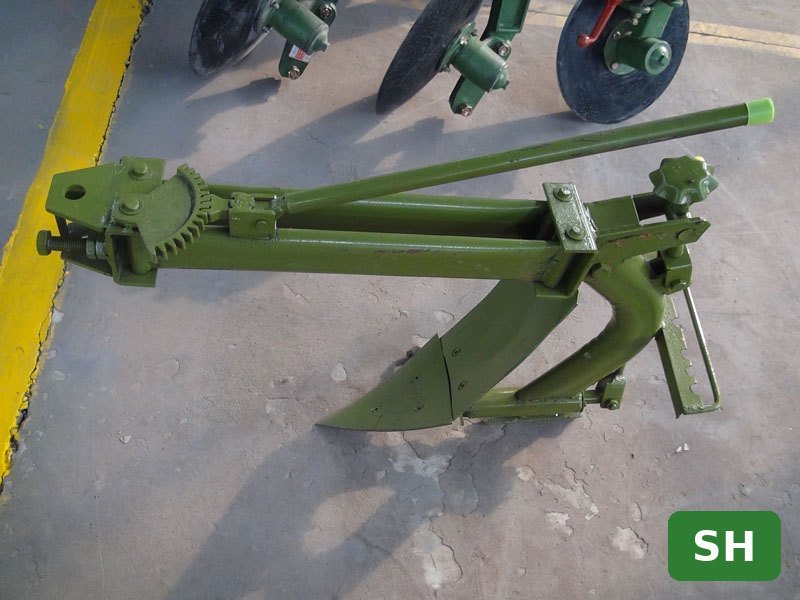
Wearing parts – plough discs and shares, harrow discs, tiller blades, bearings, belts and filters – are cheap to add to the first container and expensive to air-freight later. A good rule is to order one season’s wearing parts with the machines. See our harrow discs range for common replacement parts.
Reliable access to machines and spare parts is a key theme in the FAO’s work on sustainable agricultural mechanization.
Planning your first order? Message us on WhatsApp +86 133 8469 2372 or .
FAQ
What is the minimum order?
It depends on the product. Ask the supplier, and consider combining different machines in one container.
FOB or CIF – which is better?
If you have a reliable freight forwarder, FOB gives you more control over shipping. CIF is simpler if you do not.
How long does shipping take?
Production time plus sea transit, which varies by route. Ask for both when you request a quotation.
Get a Quote
Send us your product list, quantities and destination port. Browse our tractors, walking tractors and ploughs, and read about export and shipping.
Maoni
Tafadhali ingia ili ushiriki mjadala. Ingia Jisajili