
Potato Harvester Guide: Choosing a 4U Potato Digger for 25–100 HP Tractors
A tractor-mounted potato harvester can lift in one day what a team of workers digs by hand in a week, with fewer cut and missed tubers. But the right machine depends on your tractor power, ridge spacing and soil. This guide compares our three 4U models, explains how a potato digger works, and shows you how to set it up for clean, low-damage harvesting.
Need a recommendation? Tell us your tractor power, soil and crop on WhatsApp +86 133 8469 2372 or and we will reply with a matching model.

How a Potato Harvester Works
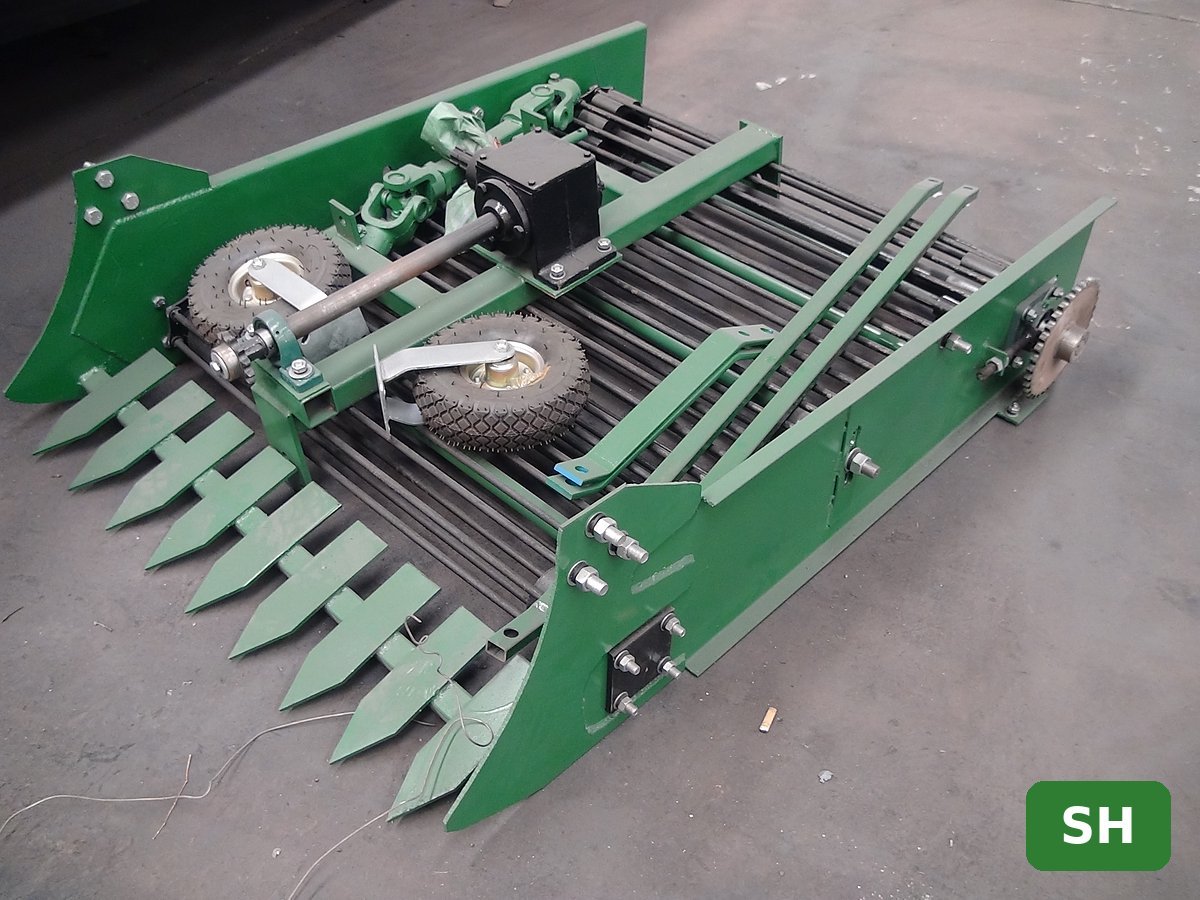
A tractor-mounted potato harvester is simple and strong. The machine hangs on the three-point linkage and is driven by the tractor PTO through a gearbox:
- Digging blade – the pointed share runs under the ridge and lifts soil and tubers together.
- Separating chain – a rod chain carries the load backwards and shakes loose soil through the gaps.
- Drop-off – clean tubers fall in a row on top of the soil, ready for quick hand picking.
Because the potatoes are left on the surface, this type is also called a potato digger or potato lifter. It replaces the hardest part of the job – digging – while keeping the investment small.
4U Potato Harvester Models Compared
| Model | Working width (cm) | Working depth (cm) | Weight (kg) | Tractor power (HP) |
|---|---|---|---|---|
| 4U-1 (0.6 m) | 60 | 10–25 | 160 | 25–45 |
| 4U-2 (0.9 m) | 90 | 10–25 | 260 | 50–70 |
| 4U-2 (1.5 m) | 150 | 10–25 | 400 | 70–100 |
Full details and photos of each model are on our harvesters page.
How to Match a Potato Digger to Your Tractor and Field
Tractor power first. The 0.6 m model suits compact tractors of 25–45 HP. The 0.9 m model needs 50–70 HP, and the 1.5 m model 70–100 HP. Pulling a wide machine with too little power in heavy soil slows the chain and leaves soil on the tubers.
Then ridge spacing. Match the working width to your rows. A 60 cm machine lifts one ridge per pass on narrow spacing; wider machines take wider beds or more rows. Measure your ridges before you order, and if you plant with our machines, compare with the row spacing in our potato planter guide.
Then farm size and labour. Because tubers are picked by hand, the digger should not run far ahead of your pickers. Small farms are often best served by the 0.6 m model; contractors and larger growers with enough pickers choose the 0.9 m or 1.5 m machines.
Use our selection assistant if you want help matching tractor and implement.
Setup and Field Tips for Clean Harvesting
- Set the depth below the tubers. The blade should run just under the deepest potatoes. Too shallow cuts tubers; too deep lifts extra soil and overloads the chain. Our machines work from 10 to 25 cm.
- Adjust forward speed. Drive slow enough for the chain to separate the soil, but not so slow that tubers bounce on an empty chain and bruise.
- Kill or remove the haulm first. Cutting or mowing the potato tops a week or two before harvest lets skins set and stops vines wrapping round the chain.
- Harvest at the right moisture. Very wet soil sticks to the tubers; very dry, hard soil causes clods and damage.
- Level the machine. Use the top link and lift arms so the blade cuts evenly across the full width.
Maintenance and Spare Parts
A potato harvesting machine works in abrasive soil, so a little daily care adds seasons to its life. Clean out soil and plant material after each day, because trapped material holds moisture and causes rust. Check chains, sprockets and belts for wear and tension before each shift. Grease the bearings and PTO shaft, and check the gearbox oil. Before storage, wash the machine, oil the chain and keep it under cover. Ask us for a spare digging blade and chain links with your order so a breakage does not stop the harvest.
Common Buying Mistakes
- Buying by width only. A wide machine on a small tractor will struggle in clay soil.
- Ignoring ridge spacing. The machine must suit the way you plant.
- Forgetting the PTO shaft. Confirm your tractor’s PTO type and the shaft length when you order.
- No picking plan. A potato harvester only lifts and lays the crop; plan labour and crates to pick up behind it.
Why Buy Direct from the Factory
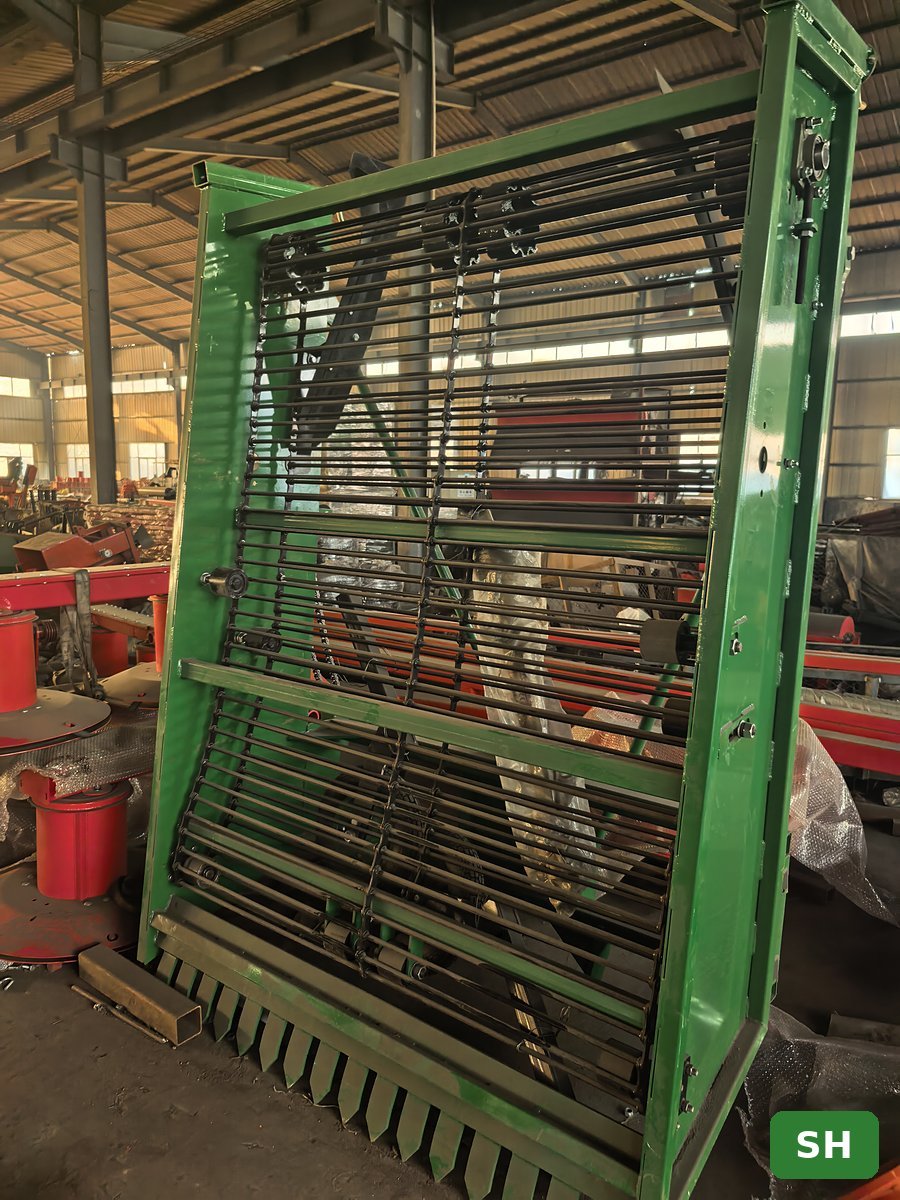
As a potato harvester manufacturer China dealers can work with directly, Shenghang builds every 4U model in our own factory and sells it direct, with SH labelling or OEM options. We also make the potato planters and ridgers that come before harvest, so one supplier can cover the whole potato line. Machines are export packed and shipped by sea, rail or air – see export and shipping. Mechanising the potato harvest is a practical step in sustainable agricultural mechanization, cutting labour and field losses.
Planning this year’s potato harvest? Send your tractor HP and ridge spacing on WhatsApp +86 133 8469 2372 or and we will recommend the right 4U model.
Related guide: Mini Combine Harvester vs Rice Reaper and Thresher
FAQ
What size potato harvester do I need for a 50 HP tractor?
The 4U-2 with 0.9 m working width is made for 50–70 HP tractors. Below 45 HP, choose the 0.6 m 4U-1.
What is the difference between a potato digger and a potato harvester?
A potato digger (or potato lifter) lifts the tubers and leaves them on the surface for picking. Larger combine harvesters also collect the tubers into a bin. Our 4U machines are digger-type.
Can a potato harvesting machine also lift other root crops?
Diggers of this type are often used for crops grown in ridges, such as onions, garlic and peanuts, but results depend on the crop and soil. Tell us your crop and we will advise.
How deep does the digging blade work?
All three models work 10–25 cm deep. Set the blade just below the deepest tubers in your ridge.
Get a Quote
Send us the model (for example 4U-2, 0.9 m), quantity, your tractor HP and PTO type, ridge spacing and destination port. Message us on WhatsApp +86 133 8469 2372 or see all machines on our harvesters page.
댓글
토론에 참여하려면 로그인해 주세요. 로그인 회원가입