
Disc Ridger Guide: How to Choose the Right Ridger for Potatoes and Row Crops
A disc ridger builds the raised beds that potatoes, cassava, sweet potatoes and peanuts need to grow well, but buying the wrong size leaves you with low ridges, wheels driving on the beds, or a tractor that struggles in heavy soil. This guide explains how a disc ridger works, compares our five Q3SH models, and shows how to match ridge spacing and tractor power before you order.
Need a recommendation? Tell us your tractor power, soil and crop on WhatsApp +86 133 8469 2372 or and we will reply with a matching model.

How a Disc Ridger Works
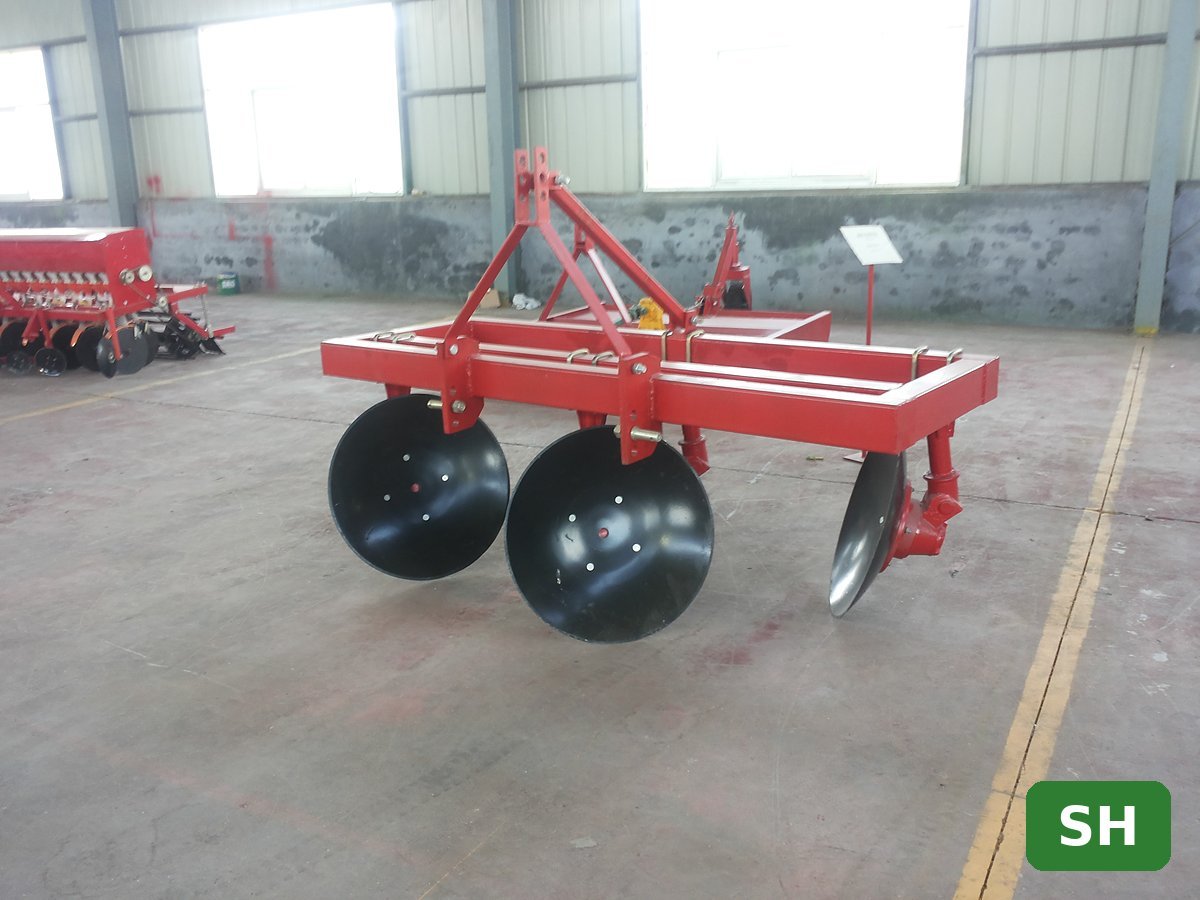
The machine carries two, three or four concave steel discs on a welded frame that hangs on the tractor’s three-point linkage. Each disc is set at an angle to the direction of travel. As the tractor moves forward the discs roll, cut into the soil and throw it sideways, so soil from two neighbouring discs meets in the middle and forms a firm ridge, with an open furrow on each side.
Changing the disc angle and the working depth changes how much soil is moved: a steeper angle and deeper setting build a taller ridge. On our models the ridge height can reach about 300 mm, depending on soil and settings.
Disc Ridger vs Ridging Plough
A ridging plough (also written ridging plow) uses fixed mouldboard bodies – moldboard in US spelling – that push soil to both sides. It makes a clean furrow in light, stone-free soil. A disc model is usually the better all-round choice for small and medium farms because it:
- copes better with stones, roots and trash left from the previous crop;
- needs less pulling power for the same width;
- is less likely to block in sticky, wet ground;
- lets you adjust ridge height simply by changing the disc angle.
If you also need inter-row weeding with depth wheels, compare our wheeled row cultivators on the cultivators page.
Q3SH Disc Ridger Models and Specifications
All models below are three-point mounted with a strong welded frame and replaceable discs. Figures are taken from our ridgers page; customisation is available.
| Model | Working width (mm) | Ridge width (mm) | Ridge height (mm) | Tractor power (hp) | Weight (kg) |
|---|---|---|---|---|---|
| Q3SH-80 | 800 | 200–450 | 150–240 | 15–20 | 140 |
| Q3SH-120 | 1200 | 200–450 | 150–240 | 25–30 | 160 |
| Q3SH-140 | 1400 | 200–450 | 150–240 | 35–40 | 180 |
| Q3SH-180 | 1800 | 200–450 | 150–300 | 55–70 | 200 |
| Q3SH-260 | 2600 | 300–500 | 150–300 | 60–90 | 280 |
How to Choose a Disc Ridger for Your Tractor and Crop
1. Start with ridge spacing. Decide the distance between ridge centres that your crop and harvesting method need. For potatoes this is often around 750–900 mm. Cassava, sweet potatoes and vegetables may use different spacing, so check local practice. Then choose the working width and number of discs that give that spacing.
2. Match tractor horsepower. Two-disc models such as the Q3SH-80 work behind tractors from 15 hp. The wide Q3SH-260 needs 60–90 hp. Heavy clay or dry, hard ground needs the upper end of each range. Our tractor horsepower guide explains how to size implements in general.
3. Set the wheel track. The tractor wheels must run in the furrows, not on the ridges you have just built. Measure your wheel track before choosing the model.
4. Think about the whole season. One machine can form beds before planting, earth up potato and cassava rows after emergence, open irrigation furrows and earth up sugarcane.

Setup and Field Tips for Even Ridges
- Prepare the seedbed first. Ridges are only as good as the soil. Plough and break clods with a rotary tiller or harrow so the discs move loose, fine soil.
- Level the frame. Adjust the top link and lift arms so the frame is level side to side and front to back. A tilted frame gives one tall and one low ridge.
- Set all discs to the same angle and depth. Make a short test run of 20–30 m, measure ridge height and spacing, then adjust.
- Keep a steady speed. Driving too fast throws soil over the ridge top; too slow leaves rough, low ridges.
For planting on the finished ridges, see our potato and cassava planters on the seeders page and our 1-row vs 2-row potato planter guide.
Maintenance and Spare Parts
Grease the disc bearings daily during the season and check them for play. Tighten all bolts after the first hours of work. Replace discs when their diameter has worn noticeably, because smaller discs cannot build full-height ridges. Clean off soil after work and store the machine under cover. Spare disc blades can be ordered together with the machine, so it makes sense to add a set to your first order.
Common Buying Mistakes
- Choosing by width only. A wide machine on a small tractor will not hold depth in heavy soil. Match power first.
- Ignoring wheel track. If the tractor wheels cannot be set to run in the furrows, the ridges get crushed.
- Not ordering spare discs. Discs wear fastest in sandy and stony soil; waiting for parts in the middle of the season costs yield.
- Using a ridger as a primary tillage tool. It shapes loose soil; it does not replace a plough on hard, unworked ground.
Why Buy Direct from the Factory
Every Q3SH machine is made in our own factory in China and supplied factory direct. We offer SH labelling or OEM options for dealers, export packing, and shipping by sea, rail or air – see export and shipping. Ridge and furrow systems are a proven way to manage water on small and medium farms; the FAO’s work on sustainable agricultural mechanization explains why suitable implements matter for productivity.
Not sure between 2, 3 or 4 discs? Send your ridge spacing and tractor horsepower on WhatsApp +86 133 8469 2372 or – our team will suggest the right model for your crop.
Related guide: Need straight irrigation furrows rather than disc ridges? Read our ridging furrower guide.
Related guide: Row crop cultivator guide: weeding and earthing up between crop rows
Related guide: Potato ridger guide: how to choose a disc ridger for potatoes
FAQ
Can a disc ridger be used as a potato ridger?
Yes. It is widely used to form potato beds before planting and to earth up the rows later, which covers the tubers and controls weeds.
What is the difference between a ridging plough and a disc ridger?
A ridging plough (ridging plow) pushes soil with fixed mouldboard or moldboard bodies. Disc models roll through the soil, handle stones and residue better and need less pulling power.
What size tractor ridger do I need for a 30 hp tractor?
The Q3SH-120 is listed for 25–30 hp tractors. In heavy soil, the smaller Q3SH-80 may be easier to pull.
Can the same ridge maker be used for cassava and sweet potatoes?
Yes. Adjust the disc angle and depth for the ridge height and spacing your crop needs; cassava, sweet potatoes, peanuts and vegetables are all grown on ridges made this way.
Get a Quote
To get a quotation, send us the model (for example Q3SH-140), quantity, your tractor horsepower, ridge spacing and destination port on WhatsApp +86 133 8469 2372. You can also browse all models and specifications on our disc ridger page.
Comments
Please log in to join the discussion. Log in Register