
Spring Tine Cultivator Guide: Sizes, Tractor HP and When to Use a Subsoiler
A spring tine cultivator is one of the most useful and lowest-cost implements a farm can own: it breaks surface crusts, pulls out young weeds and prepares a fine seedbed without turning the soil over. The challenge for buyers is choosing the right width and number of tines for their tractor and soil. This guide compares our six T3SH sizes for 15–120 hp tractors and explains when a subsoiler or row cultivator is the better choice.
Need a recommendation? Tell us your tractor power, soil and crop on WhatsApp +86 133 8469 2372 or and we will reply with a matching model.

How a Spring Tine Cultivator Works
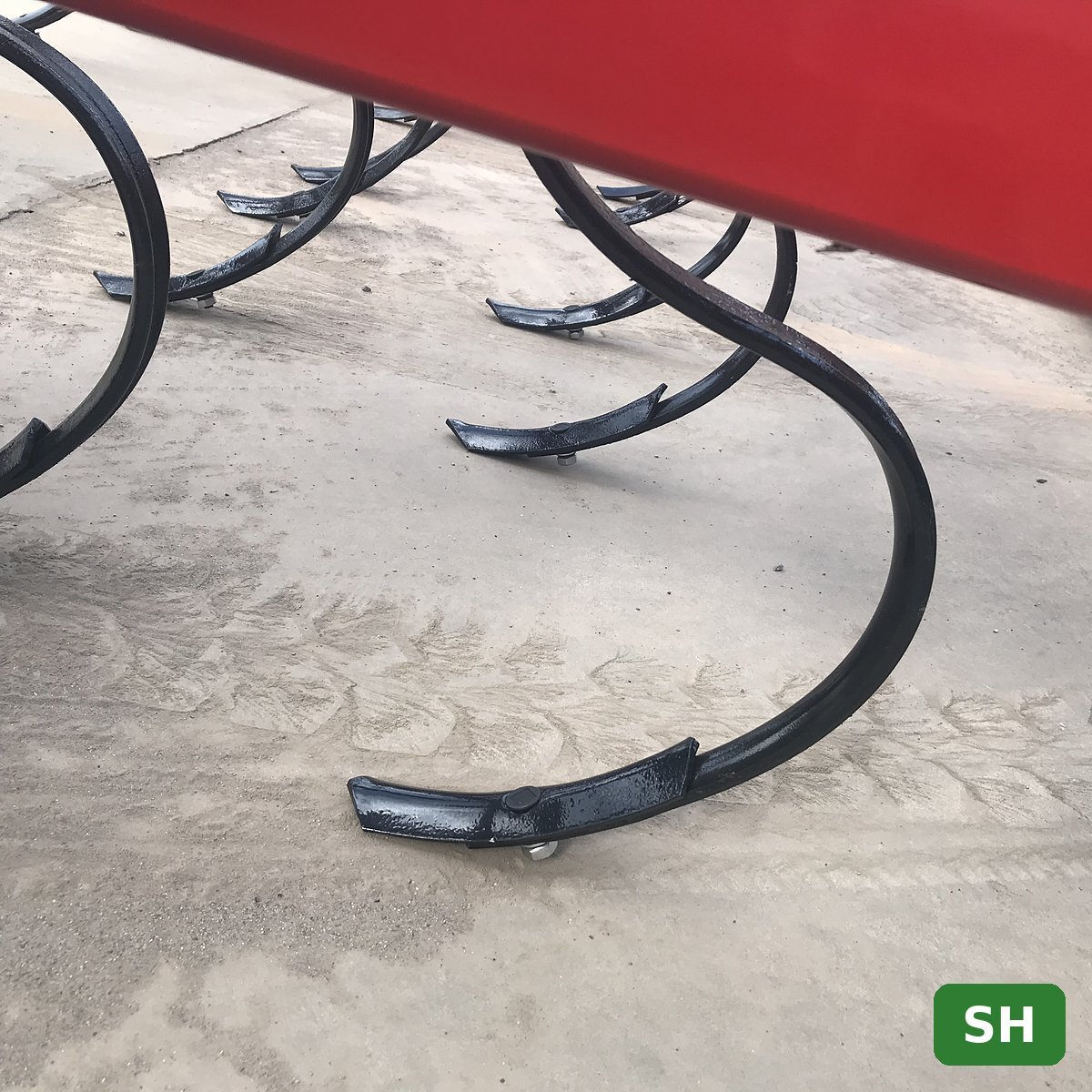
The frame carries a row of curved, flexible tines, each with a narrow point at the tip. As the tractor pulls the machine, the tines vibrate through the top layer of soil. That vibration shatters crusts and clods, loosens the surface and lifts small weeds so they dry out in the sun. Unlike a plough, it does not invert the soil, so moisture stays in the ground and residue stays near the surface.
The spring action also protects the machine: when a tine hits a stone or root it flexes and springs back instead of breaking. That makes this type of tractor cultivator a good fit for mixed and stony soils.
T3SH Spring Tine Cultivator Sizes and Specifications
All T3SH models are three-point mounted, with a working depth of 100–220 mm. Data comes from our cultivators page; customisation is available.
| Model | Working width (mm) | No. of tines | Weight (kg) | Overall size L×W×H (mm) | Tractor power (hp) |
|---|---|---|---|---|---|
| T3SH-1.2 | 1200 | 5 | 200 | 1010×900×1100 | 15–35 |
| T3SH-1.5 | 1500 | 7 | 280 | 1400×900×1100 | 30–45 |
| T3SH-1.8 | 1800 | 9 | 350 | 1860×900×1200 | 40–65 |
| T3SH-2.1 | 2100 | 11 | 420 | 2270×900×1200 | 60–80 |
| T3SH-2.7 | 2700 | 13 | 560 | 2705×900×1200 | 80–100 |
| T3SH-3.0 | 3000 | 15 | 690 | 3100×900×1200 | 100–120 |
Spring Tine, Subsoiler or Row Cultivator?
Our range covers three different jobs. Choose by the problem you need to solve:
- Seedbed and stubble work: the spring tine cultivator. Use it after ploughing to break clods, or after harvest to work stubble and kill weeds.
- Compaction and poor drainage: a subsoiler. The 3SH series (1000–2600 mm wide, 100–250 mm deep, 25–100 hp) uses heavy shanks to break the hard plough pan so water and roots go deeper.
- Weeding between growing crops: a wheeled row cultivator, also called an inter-row cultivator. The W3SH series (1500–3700 mm, 2–4 ridging bodies, 15–45 hp) has depth-control wheels so roots are not damaged.
Matching Width to Tractor HP, Farm Size and Soil
Tractor power. Use the listed matching power as your guide. A 25 hp compact tractor fits the T3SH-1.2; a 50 hp tractor fits the T3SH-1.8; a 90 hp tractor fits the T3SH-2.7. See our tractor horsepower guide for more on sizing implements.
Soil type. In heavy clay or dry, hard ground, choose the narrower model in your power range, or work shallower. Light, sandy soil lets you pull a wider frame.
Farm size. Wider frames cover more hectares per day, but only if the tractor can pull them at a steady speed. A narrower machine at the right speed often does more work than a wide one that keeps stalling.
Our selection assistant lists every model that matches your tractor horsepower.
Field Tips for Better Results
- Work when the soil is just moist. Wet soil smears and sticks; very dry soil comes up in big clods.
- Level the frame with the top link so the front and rear tines work at the same depth.
- Use two passes at an angle for a finer seedbed, especially after ploughing.
- Keep a steady speed so the tines vibrate properly; too slow and they cut instead of shattering.
- Combine with other tools. A typical sequence is subsoil every few years where needed, plough, break clods with a disc harrow or rotary tiller, cultivate, then plant.
Maintenance and Spare Parts
Check the tine points every day in the season. Points wear fastest in sandy and stony soil, and worn points reduce depth and weed kill. Tighten tine clamp bolts after the first hours of use and regularly after that. Look for cracked or permanently bent tines and replace them in time. Clean off soil and store the machine under cover after the season. Ordering spare points and tines with the machine avoids downtime later.

Common Buying Mistakes
- Buying too wide. The most common mistake. Match tractor power before width.
- Expecting it to fix compaction. Spring tines loosen the top layer; a hard pan below needs deep loosening.
- Using it between rows of growing crops. For inter-row weeding, a wheeled row cultivator or a disc ridger is safer for crop roots.
- Forgetting spare points. They are small parts that decide how well the machine works.
Why Buy Direct from the Factory
All our cultivators and soil tools are built in our own factory in China and sold factory direct. Dealers can choose SH labelling or OEM options, and we provide export packing with shipping by sea, rail or air – see export and shipping. Reduced and shallow tillage is part of the FAO’s guidance on sustainable agricultural mechanization, and tine implements are a common tool for it.
Choosing between tines, a subsoiler or a row unit? Message us on WhatsApp +86 133 8469 2372 or with your tractor, soil and crop, and we will suggest the best combination.
Related guide: Subsoiler for tractor: how to choose the right size for 25–100 HP
Related guide: For irrigation and drainage furrows, see our ridging furrower and tractor ditcher guide.
Related guide: Row crop cultivator guide: 3 inter-row models for 15–45 HP tractors
Related guide: Cultivator vs rotary tiller: which should you buy?
FAQ
What size spring tine cultivator fits a 50 hp tractor?
The T3SH-1.8 with 9 tines is listed for 40–65 hp tractors. In hard soil, the T3SH-1.5 (30–45 hp) is an easier pull.
What is the difference between a cultivator and a subsoiler?
A cultivator works the top 100–220 mm to break crusts and control weeds. A subsoiler works deeper, with heavy shanks that break the compacted layer below normal tillage depth.
Can a tractor cultivator replace a plough or plow?
On land that is already in good condition, many farmers use cultivation instead of ploughing every year. On hard, unworked ground or heavy weeds, ploughing first still gives better results.
What is an inter-row cultivator used for?
It weeds between crop rows such as corn, cotton, potatoes and vegetables and can earth up plants. Our W3SH wheeled models have depth wheels for even work.
Get a Quote
Send us the model (for example T3SH-2.1), quantity, your tractor horsepower, soil type and destination port on WhatsApp +86 133 8469 2372. Browse all models on our spring tine cultivator and subsoiler page.
Comments
Please log in to join the discussion. Log in Register