
Rotary Tiller Buying Guide: How to Match Width and Horsepower
A rotary tiller is one of the most useful implements a farm can own. In a single pass it cuts, lifts and mixes the soil with crop residue, leaving a fine, level seedbed that is ready for planting. This rotary tiller buying guide explains how the machine works, how to match the working width to your tractor horsepower, which type suits your fields, and how to get a good finish season after season.
What Is a Rotary Tiller and How Does It Work?
A tractor rotary tiller – called a rotavator in India, Africa and Southeast Asia – is a horizontal rotor fitted with curved L-shaped blades. The rotor is driven by the tractor PTO through a gearbox and turns in the same direction as the wheels. As the tractor moves forward, each blade slices a thin layer of soil, throws it against the rear shield and breaks it into small crumbs.
Because the machine breaks the soil actively instead of dragging through it, a single pass gives a much finer tilth than a disc harrow. That makes it ideal for vegetables, rice paddies, sugarcane, potatoes and any crop with small seeds that needs close contact with moist soil.

Rotary Tiller vs Plough and Disc Harrow
On heavy clay, or where weeds and stubble must be buried deeply, most farmers still plough first and use the tiller to finish the seedbed. On light and medium soil, however, a rotary tiller used after harvest can replace both ploughing and harrowing. That saves one or two passes, which means less fuel, less labour and less soil compaction from tractor wheels. Many farms use both: a plough every few years for deep inversion, and a tiller every season for seedbed preparation.
How to Match Width to Tractor Horsepower
The most common mistake is buying a machine that is too wide for the tractor. A rotary tiller absorbs power through the PTO, so the tractor must have enough horsepower to turn the rotor at full depth without stalling. As a practical guide:
- Light, sandy or already-worked soil: allow about 20–25 HP per metre of working width.
- Medium loam: allow about 25–30 HP per metre.
- Heavy clay, wet soil or hard ground: allow 30–40 HP per metre.
So a 50 HP tractor normally pulls a 1.6–1.8 m machine in medium soil, while a 90 HP tractor can run a 2.2–2.5 m unit. The working width should also be at least as wide as the outside of the tractor’s rear tyres, so the wheel marks are tilled out.
Our R1SH series covers 1200–2500 mm working width with 24–70 blades, PTO-driven at 540 r/min, for tractors from 20 to over 100 HP. Check that your tractor has a 540 r/min PTO before ordering.
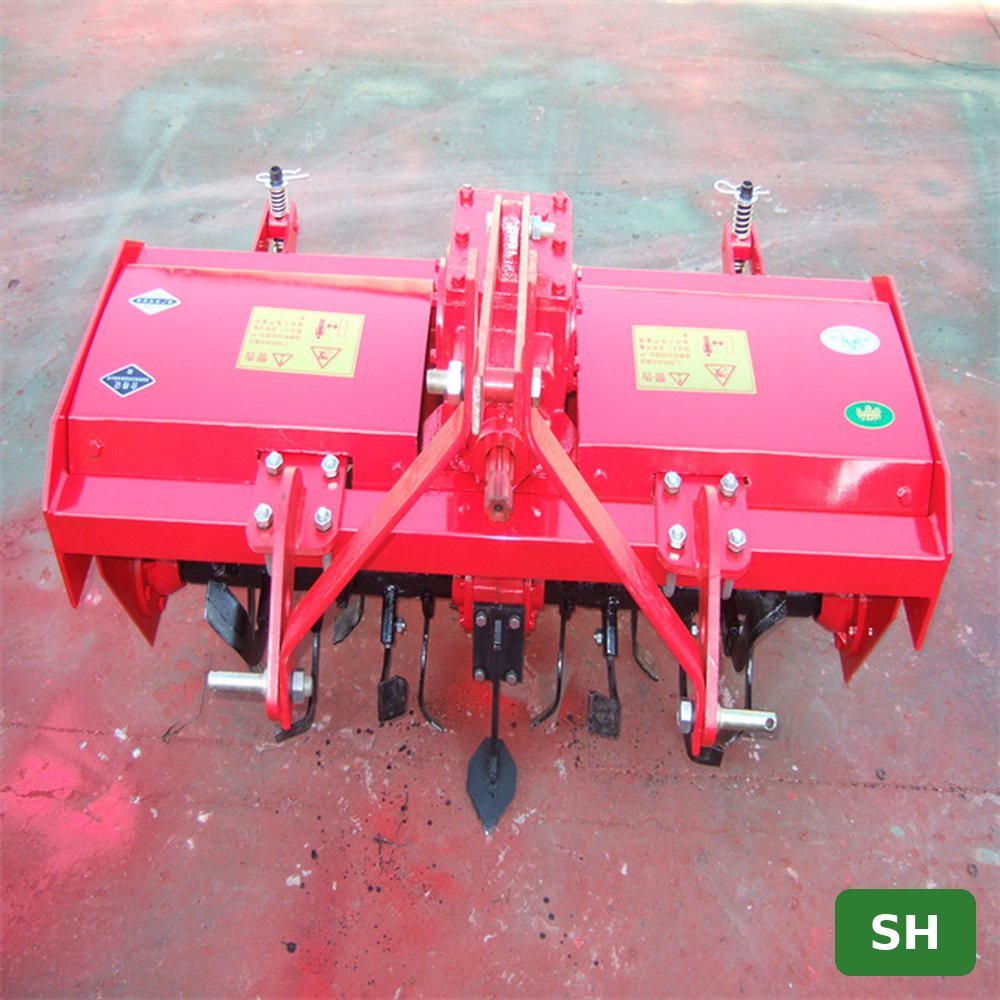
Rotary Tiller Models Compared: R1SH-120 to R1SH-250
The table below compares all eight rotary tiller models in our R1SH series side by side, so you can match the working width to your tractor horsepower at a glance. All models are three-point mounted and driven by a 540 r/min PTO.
| Model | Working width | Working depth (mm) | No. of blades | Weight (kg) | Tractor power (HP) |
|---|---|---|---|---|---|
| R1SH-120 | 1.2 m | 140–220 | 24 | 178 | 20–25 |
| R1SH-125 | 1.25 m | 140–220 | 26 | 180 | 20–25 |
| R1SH-150 | 1.5 m | 150–250 | 34 | 220 | 30–45 |
| R1SH-160 | 1.6 m | 150–250 | 36 | 223 | 40–45 |
| R1SH-180 | 1.8 m | 150–250 | 50 | 350 | 50–55 |
| R1SH-200 | 2.0 m | 150–250 | 58 | 365 | 60–65 |
| R1SH-220 | 2.2 m | 150–250 | 62 | 415 | 65–80 |
| R1SH-250 | 2.5 m | 150–250 | 70 | 440 | 100+ |
How to read this comparison: the small R1SH-120 and R1SH-125 models suit 20–25 HP compact tractors and small plots; the R1SH-150 to R1SH-180 models are the most popular sizes for 30–55 HP tractors; and the R1SH-200 to R1SH-250 models are for 60 HP and larger tractors on bigger farms. In heavy or wet soil, choose one size narrower than the table suggests. Full specifications are on our rotary tillers page.
Which Type of Rotary Tiller Do You Need?
- Standard mounted tiller: the everyday choice for seedbed preparation on most farms.
- Side-drive tiller: heavy-duty models with the drive on the side, for deeper work in hard soil.
- Tiller with stubble cutter: chops corn, wheat and rice stubble and tills in one pass – ideal straight after harvest.
- Rotary tillage seeder: combines the tiller with a grain seeder, disc openers and a packer roller, so the field is tilled and sown with wheat or other grains at the same time.
For very small plots and paddy fields, a compact unit on a walking tractor is the low-cost alternative.
Getting a Good Finish in the Field
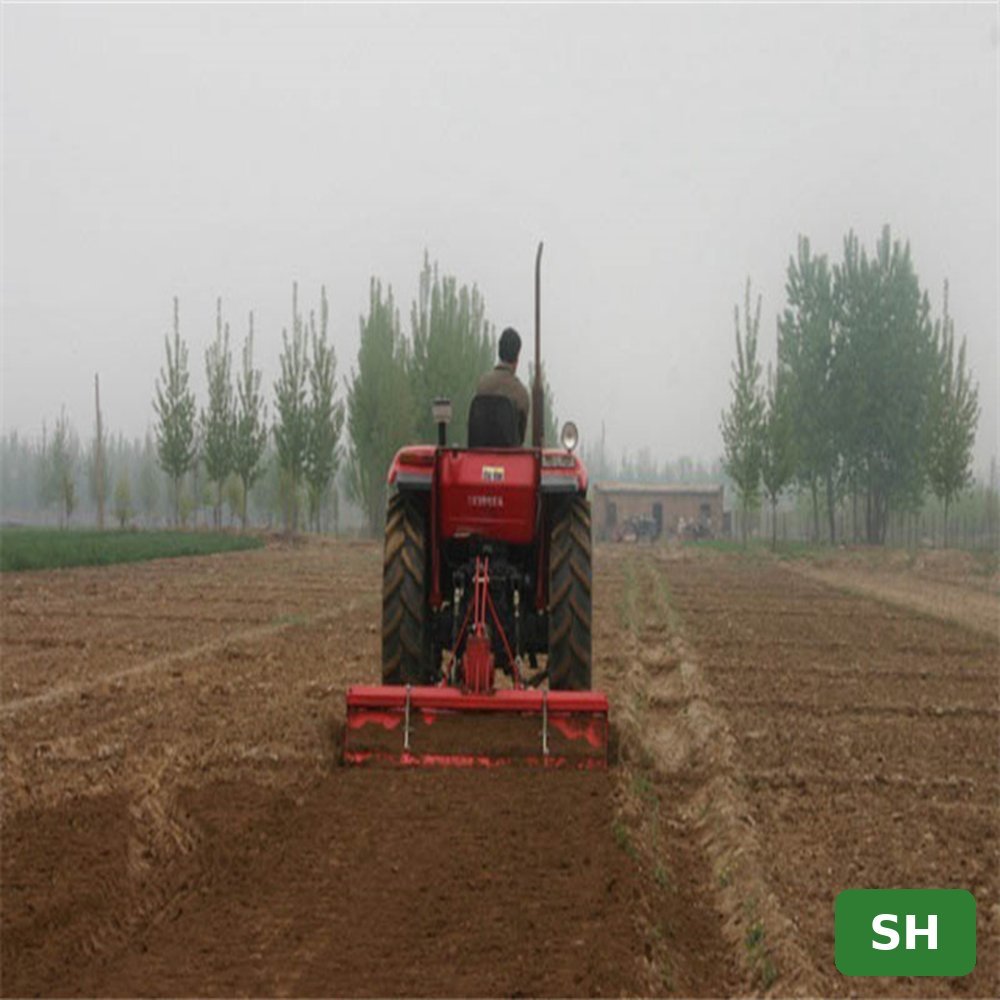
Set the working depth with the side skids or rear depth wheel and the tractor’s three-point linkage, then level the machine from side to side. The rear shield controls the finish: lower it for a smooth, fine surface; raise it to leave a rougher tilth that resists wind and water erosion. Forward speed matters too – drive slower for finer soil and faster for coarser soil and more hectares per hour.
Avoid tilling very wet soil. Wet clay smears under the blades and can form a hard layer just below the working depth. If that layer already exists, break it every few years with a subsoiler from our cultivators range.
Maintenance Checklist
- Check gearbox and side-drive oil before each season and after the first 50 hours.
- Grease the PTO shaft joints and rotor bearings every working day.
- Replace bent, broken or badly worn blades in pairs on opposite sides to keep the rotor balanced.
- Tighten blade bolts after the first few hours of work.
- Clean off soil and plant residue and store the machine under cover.
Order a set of spare blades with each machine – they are the main wear part and dealers who keep them in stock give their customers much better service.
Fewer passes mean lower fuel use and less soil compaction. The FAO’s work on sustainable agricultural mechanization explains how the right equipment helps farmers save labour and work on time.
Related guide: Rotary Tiller vs Disc Harrow: 6 Key Differences and Which to Buy
Related guide: Rotary Tiller Blades: Types, Blade Count by Model and Replacement
Related guide: Side drive rotary tiller vs centre drive: 5 key differences.
Related guide: Cultivator vs rotary tiller: key differences explained
Rotary Tiller FAQ
What size rotary tiller fits a 50 HP tractor?
Usually 1.6–1.8 m in normal soil. In heavy or wet soil choose the narrower size.
Can a rotary tiller replace a plough?
On light and medium soil, often yes. On heavy clay or where deep inversion is needed, plough first.
How deep does a rotary tiller work?
Typically 10–18 cm depending on the model, soil and tractor power.
Is a rotavator the same as a rotary tiller?
Yes. Rotavator is the common name in India, Africa and Southeast Asia for a tractor rotary tiller. Our R1SH rotavator range covers 1200–2500 mm working width.
Which rotary tiller for tractor of 30 HP?
In medium soil, allow about 25–30 HP per metre, so a 30–35 HP tractor runs a 1.2 m rotary tiller for tractor use. In heavy or wet soil, keep to the narrowest size.
How often should rotary tiller blades be replaced?
Check rotary tiller blades every day and replace bent, broken or badly worn ones in pairs on opposite sides of the rotor. Keep a spare set of rotary tiller blades with each machine, because they are the main wear part.
Get a Quote
See the full range of rotary tillers with photos and specifications, or use our selection assistant to find the right width for your tractor. Send us your tractor power, soil type, quantity and destination port by WhatsApp or email, and we will reply with a quotation and shipping plan. We also supply 4WD tractors from 20 to 200 HP to drive them.
Comments
Please log in to join the discussion. Log in Register