
Row Crop Cultivator Guide: 3 Best Inter-Row Models for Spray-Free Weeding (15–45 HP)
A row crop cultivator is the fastest way to kill weeds between the rows of corn, cotton, potatoes and vegetables without spraying. The hard part is choosing the right working width, row spacing and frame for your tractor, so this guide explains how an inter-row cultivator works, compares our three models and lists the mistakes buyers make most often.
Need a recommendation? Tell us your tractor power, soil and crop on WhatsApp +86 133 8469 2372 or and we will reply with a matching model.

How a Row Crop Cultivator Works
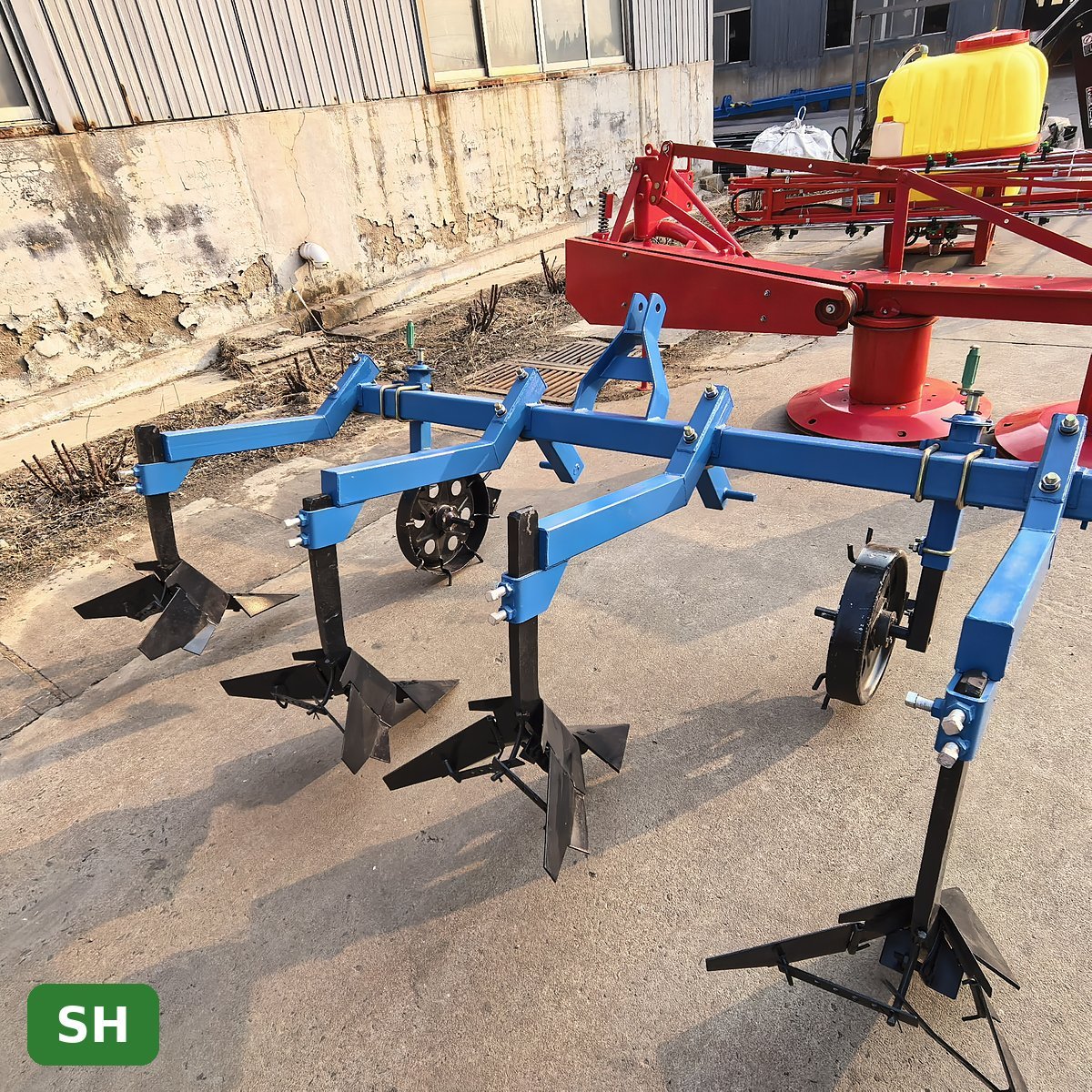
A row crop cultivator hangs on the tractor’s three-point linkage and works in the spaces between crop rows during the growing season. Each working unit has a shank with a sweep or ridging body. As the tractor moves forward, the sweeps cut weeds just below the surface and loosen the crust, and the ridging bodies push loose soil towards the plants.
That soil movement does two jobs at once. It buries small weeds inside the row, where a sweep cannot reach, and it earths up crops such as corn, potatoes and cotton so they stand firmer and send out more roots.
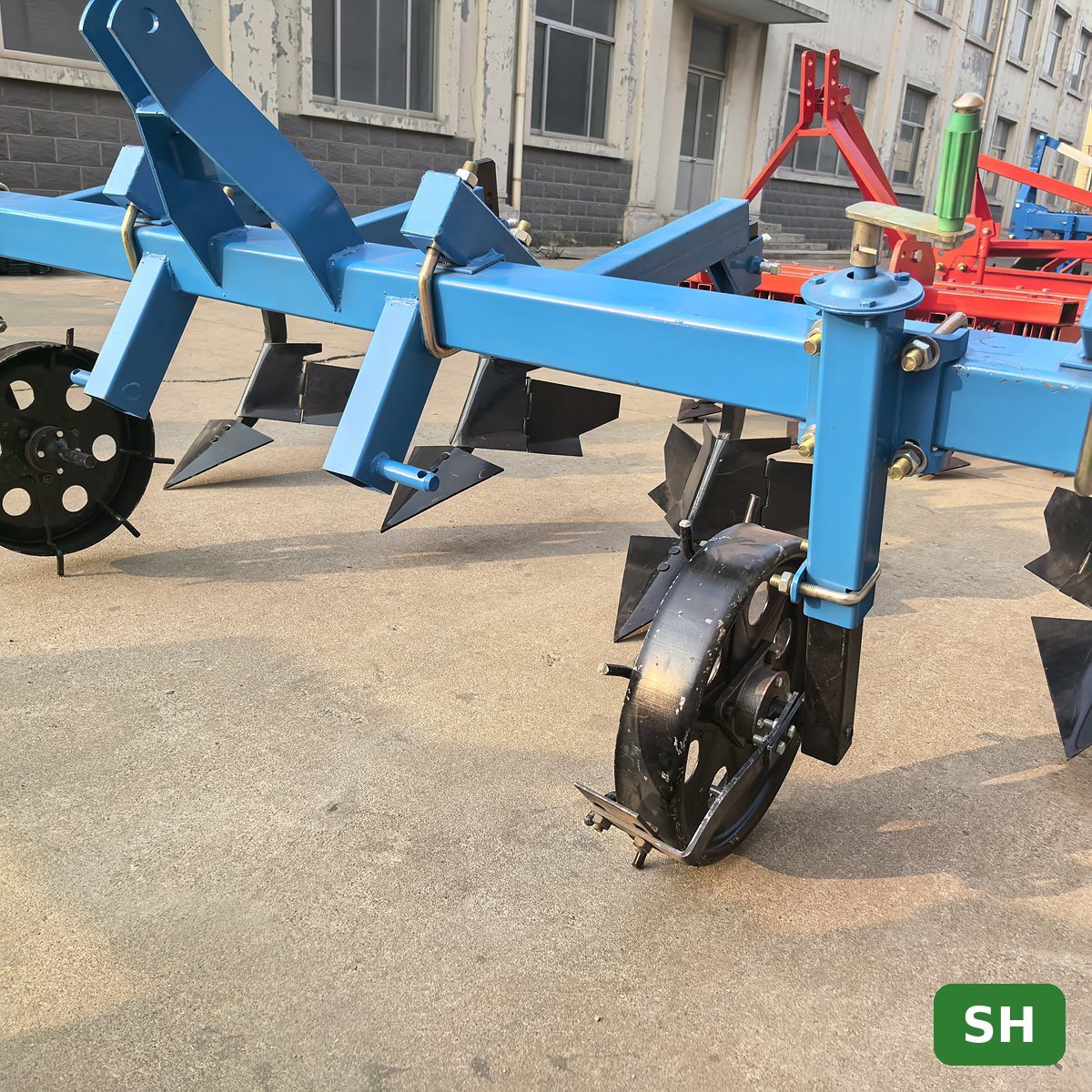
Depth-control wheels are what make a wheeled row cultivator different from a simple toolbar. They ride on the soil surface and hold every unit at the same depth, so the sweeps do not dig deeper on soft ground and cut crop roots, or ride out of the soil on hard patches.
SH W3SH Wheeled Row Cultivator Models
Our W3SH series is three-point mounted, with 2 to 4 ridging bodies, depth wheels and adjustable spacing. All figures below come from our cultivators page.
| Model | Working width (mm) | Working depth (mm) | Ridging rows | Ridging spacing (mm) | Weight (kg) | Tractor power (hp) |
|---|---|---|---|---|---|---|
| W3SH-2 | 1500 | 80–150 | 2 | 450–600 | 120 | 18–20 |
| W3SH-3 | 2900 | 80–150 | 3 | 450–600 | 130 | 15–30 |
| W3SH-4 | 3700 | 80–150 | 4 | 450–600 | 150 | 30–45 |
Specifications are for reference, and customisation is available. If you also need seedbed or stubble work before planting, compare the T3SH spring-tine models in our spring tine cultivator guide.
How to Match a Row Crop Cultivator to Tractor HP, Row Spacing and Soil
Start with your row spacing, not the width. The bodies must run in the middle of each inter-row space. W3SH bodies adjust from 450 to 600 mm, which suits many vegetable, bean and corn layouts. Measure the rows your planter actually makes before you order.
Match the number of rows to your planter. If you plant 2 rows per pass, a 2-row cultivator follows the planter’s lines exactly. A 4-row machine on 2-row planting will drift across the joins between passes and damage plants.
Check tractor power and wheel track. Use the matching power in the table as your guide: the W3SH-2 for small 18–20 hp tractors, the W3SH-3 for 15–30 hp, and the W3SH-4 for 30–45 hp. Set the tractor’s wheel track so the tyres run between the rows and do not crush the crop.

Think about soil. In heavy clay and dry, hard ground, work shallower and slower; in light sandy soil you can run at full depth. Our selection assistant lists every model for your tractor horsepower.
Inter-Row Cultivator Setup and Field Tips
- Timing: cultivate when weeds are small, at the two to four leaf stage. Large weeds with deep roots are hard to kill mechanically.
- Soil moisture: work when the topsoil is dry enough to crumble. In wet soil, cut weeds can root again and the bodies smear the soil.
- Levelling: adjust the top link so the frame runs level from front to back, then set the depth wheels so all sweeps work at the same depth.
- Distance from the plants: leave a safe strip beside young crops on the first pass and move the bodies closer as the plants grow taller.
- Speed: drive steadily. Too fast throws soil over small plants; too slow leaves soil in clods.
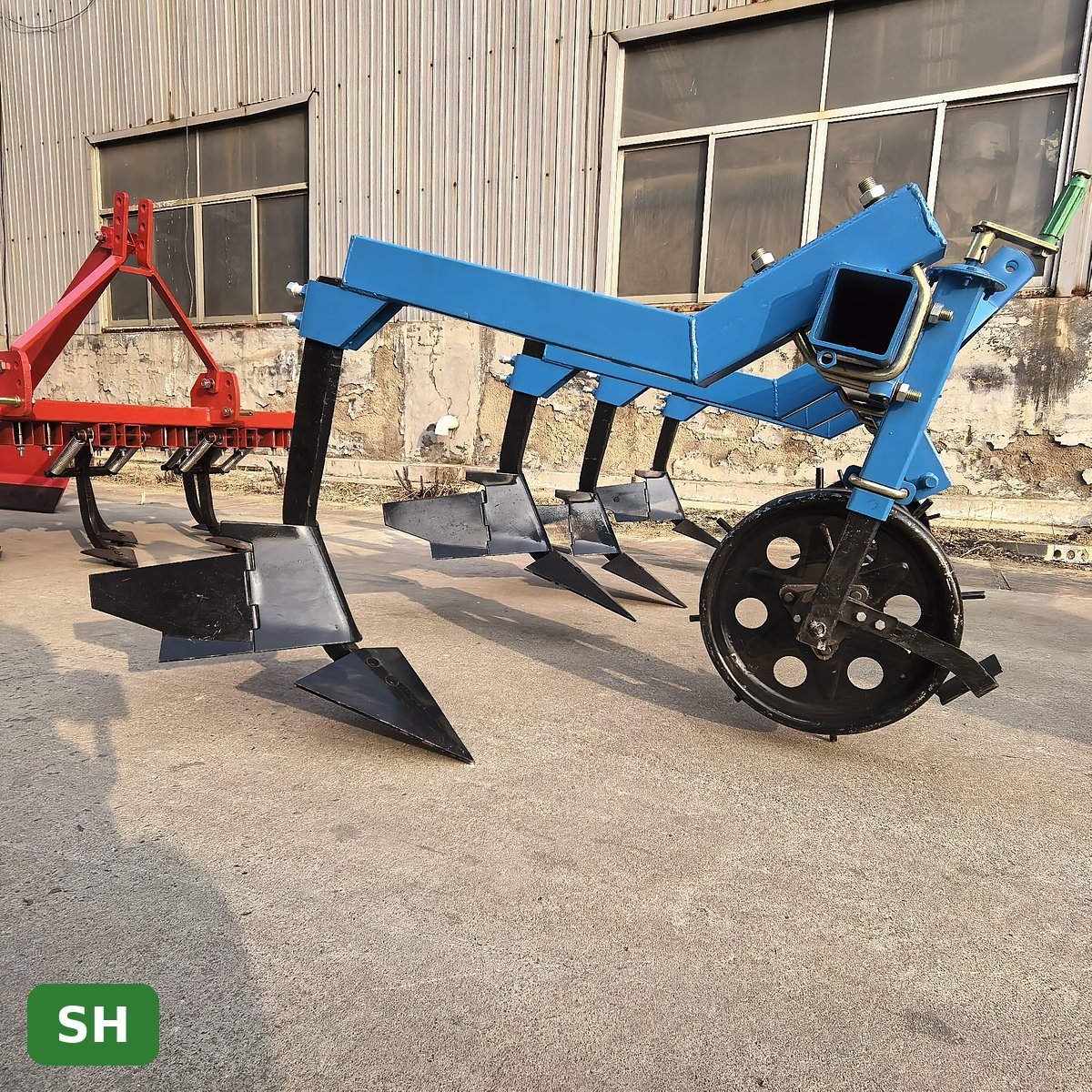
When you use a cultivator for corn or cotton, make two passes: an early shallow pass to clean the rows, and a later pass with deeper ridging to earth up the crop before the canopy closes. For potato and cassava ridges, compare our disc ridgers.
Maintenance and Spare Parts
A wheeled row cultivator is simple, but it works in abrasive soil every day of the season. Check the sweep points and ridging boards weekly and turn or replace them before they wear into the shank. Tighten the U-bolt clamps after the first hours of work, because a loose clamp lets a body swing out of line and cut crop roots. Grease the depth wheel hubs, clean off soil after work and store the machine under cover. Spare sweeps and ridging bodies can be packed in the same shipment as the machine.
Common Buying Mistakes
- Buying by width alone. A wide frame is useless if the row spacing does not match your planter.
- Too big for the tractor. A small tractor cannot lift or steer a heavy 4-row frame accurately between rows.
- No depth wheels. Without them, any tractor cultivator for weeding changes depth with every bump.
- Forgetting the wheel track. Tractor tyres that run on the rows undo the work of the best machine.
- No spare sweeps. Order a set of wear parts with the machine so a worn point does not stop work mid-season.
Why Buy Direct from the Factory
Shenghang builds every row crop cultivator in our own factory in China and sells direct to dealers, importers and farms. We offer SH labelling and OEM options, export packing, and shipping by sea, rail or air. Many buyers combine a cultivator with a seeder, a sprayer and other implements in one container; see export and shipping for how we pack and ship. Mechanical weeding is part of good field practice, and the FAO’s work on sustainable agricultural mechanization covers how the right implements save labour on small and medium farms.
Not sure which row spacing fits? Send your crop, row spacing and tractor HP on WhatsApp +86 133 8469 2372 or and our engineers will suggest a setup.
Row Crop Cultivator FAQ
What is an inter-row cultivator used for?
It removes weeds between crop rows and earths up the plants during the growing season, so you need less herbicide and the crop stands firmer.
Which cultivator for corn is best on a small tractor?
For 18–20 hp, the 2-row W3SH-2 is the usual choice. With 30–45 hp, the 4-row W3SH-4 covers more ground per pass.
Can a tractor cultivator for weeding also make ridges?
Yes. The ridging bodies push soil towards the rows, which is ideal for earthing up corn, potatoes and cotton. For tall, wide ridges before planting, a disc ridger is better.
Is a row cultivator the same as a spring tine cultivator?
No. Spring tines work the whole field before planting; a row unit works only between the rows after the crop is up.
Get a Quote
To get a fast, accurate quotation for a row crop cultivator, send us: the model (for example W3SH-3), the quantity, your tractor HP, your crop and row spacing, and your destination port. Message us on WhatsApp +86 133 8469 2372 or browse all models on our cultivators page.
Comments
Please log in to join the discussion. Log in Register