
Side Drive Rotary Tiller vs Centre Drive: 5 Differences That Decide Who Wins in Hard Soil
A side drive rotary tiller sends power down one end of the rotor instead of through a gearbox in the middle. That small design change matters when your soil is hard, your fields are full of residue or you need deeper tillage. This guide explains how side drive and centre drive tillers differ, which tractors they suit and how to choose the right one for your farm.
Need a recommendation? Tell us your tractor power, soil and crop on WhatsApp +86 133 8469 2372 or and we will reply with a matching model.
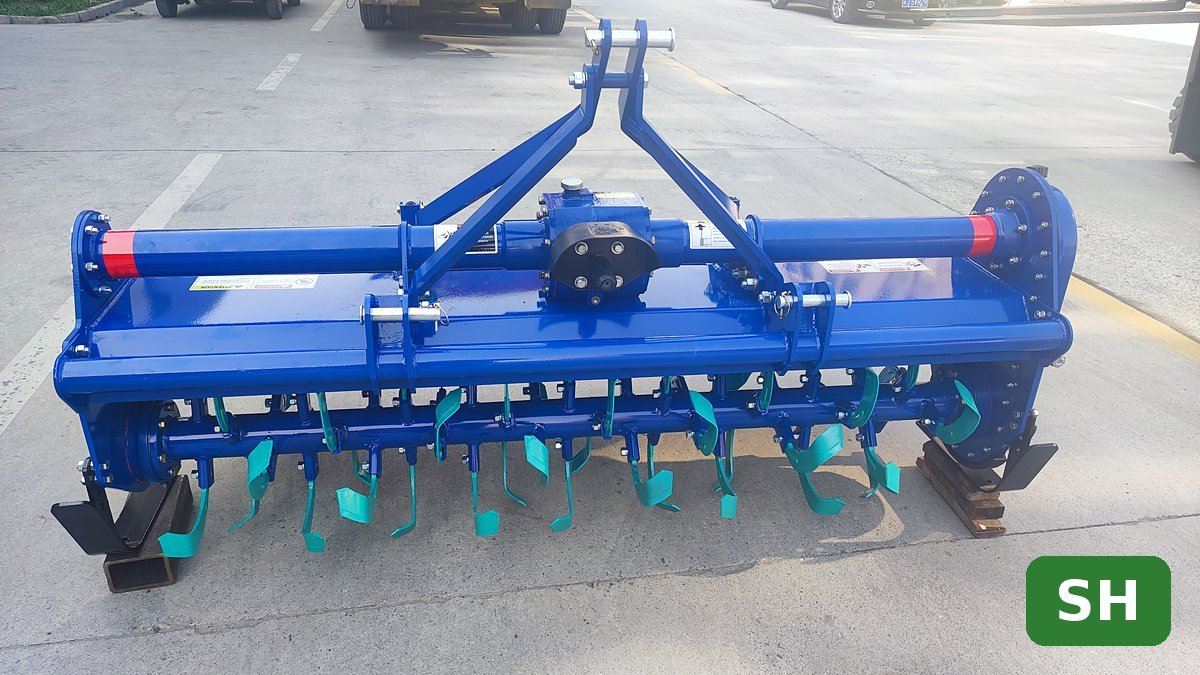
How a Side Drive Rotary Tiller Works
A tractor rotary tiller takes power from the PTO at 540 r/min; the input gearbox turns it 90 degrees towards the blade rotor.
- Centre drive: the drive goes straight down from the central gearbox to the middle of the rotor. It is simple and light, but the drive housing sits in the soil and leaves a narrow strip in the centre that the blades do not reach.
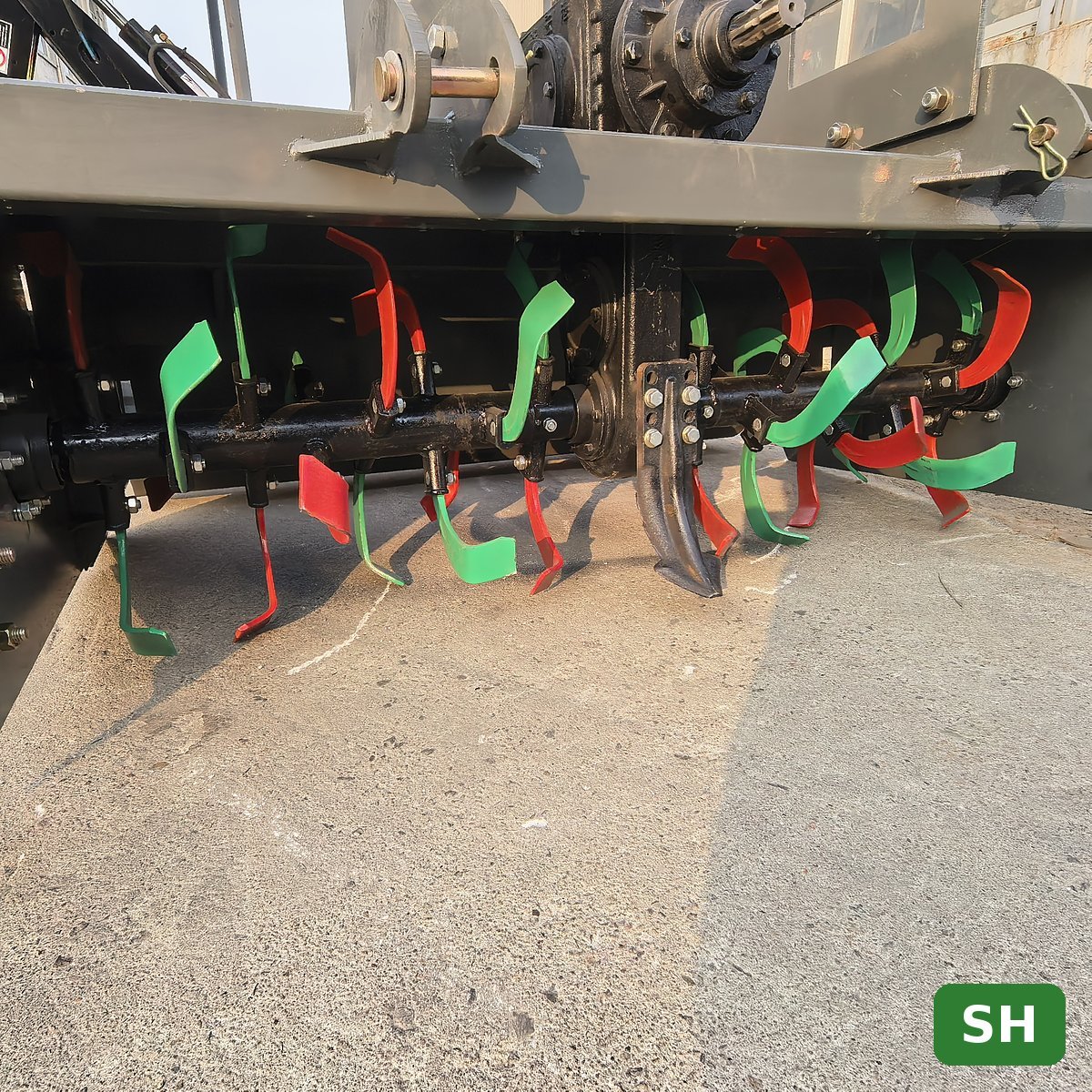
- Side drive: a cross shaft carries the power to a housing at one end of the machine, and the drive runs down that side to the rotor. The rotor is free across its full width, so blades work the whole strip with no centre gap.
On our range, side-drive models are the heavy-duty versions, built for deeper work in hard soil. Centre drive tillers are the standard R1SH series.
Side Drive vs Center Drive Rotary Tiller: 5 Key Differences
- Even tillage: a side drive rotary tiller has no housing in the middle of the bed, so the seedbed is even across its width. A center drive rotary tiller can leave a small ridge or untilled line in the centre.
- Depth: because nothing in the middle drags through the soil, side drive machines can work deeper in hard ground.
- Residue: straw and stalks can wrap around a central housing. With the drive on the side, trash flows through more freely.
- Strength: side drive tillers are usually built heavier, which suits clay, stony fields and contractors who work long hours.
- Weight and power: the heavier build needs more tractor power and lift capacity. For light soil and small tractors, a centre drive model is lighter and easier to handle.
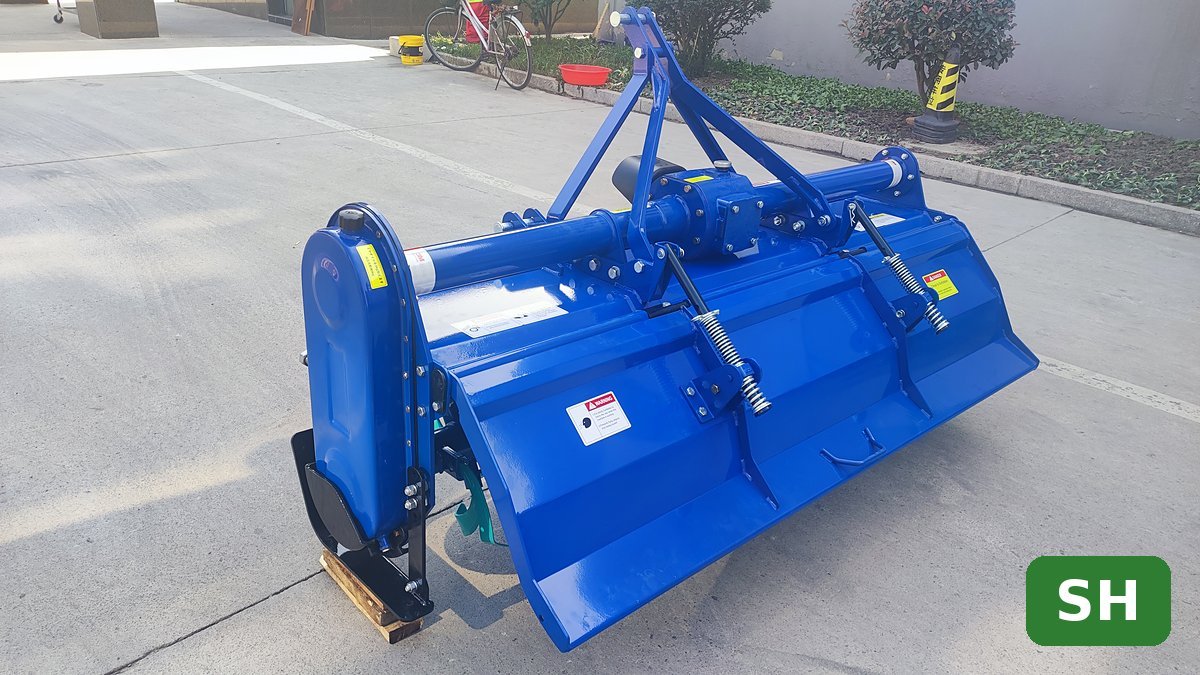
Centre Drive Rotary Tiller Models (R1SH Series)
The table shows our standard R1SH models from the rotary tillers page. Side-drive specifications are sent on request: tell us your tractor power and soil and we will send the matching model.
| Model | Working width (cm) | Working depth (mm) | Blades | Weight (kg) | Tractor (hp) |
|---|---|---|---|---|---|
| R1SH-120 | 120 | 140–220 | 24 | 178 | 20–25 |
| R1SH-125 | 125 | 140–220 | 26 | 180 | 20–25 |
| R1SH-150 | 150 | 150–250 | 34 | 220 | 30–45 |
| R1SH-160 | 160 | 150–250 | 36 | 223 | 40–45 |
| R1SH-180 | 180 | 150–250 | 50 | 350 | 50–55 |
| R1SH-200 | 200 | 150–250 | 58 | 365 | 60–65 |
| R1SH-220 | 220 | 150–250 | 62 | 415 | 65–80 |
| R1SH-250 | 250 | 150–250 | 70 | 440 | >100 |
All R1SH models are three-point mounted and run at 540 r/min PTO speed.
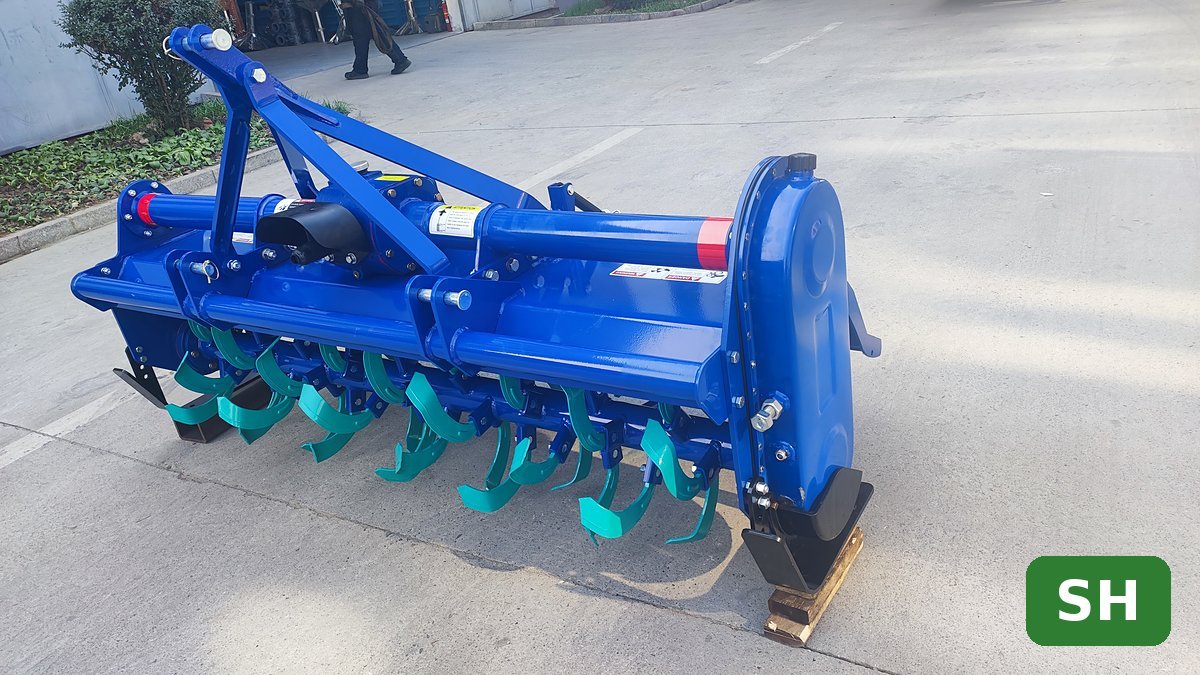
Which Tractor and Soil Suit a Side Gear Rotavator?
A side gear rotavator, as it is often called in India, Africa and Southeast Asia, makes the most sense when:
- your soil is heavy clay, dry and hard, or has a compacted layer;
- you till after harvest with lots of straw, corn stalks or rice stubble;
- you want an even seedbed with no centre ridge;
- your tractor has enough power and lift capacity for a heavier machine.
As a rough guide, allow about 20–25 HP per metre of working width in light soil and 30–40 HP per metre in heavy or wet soil, and choose a width at least as wide as the outside of your rear tyres. A rotavator for hard soil should sit toward the upper end of that power range. If you are still choosing the tractor, see our 4WD tractors from 20 to 200 HP.
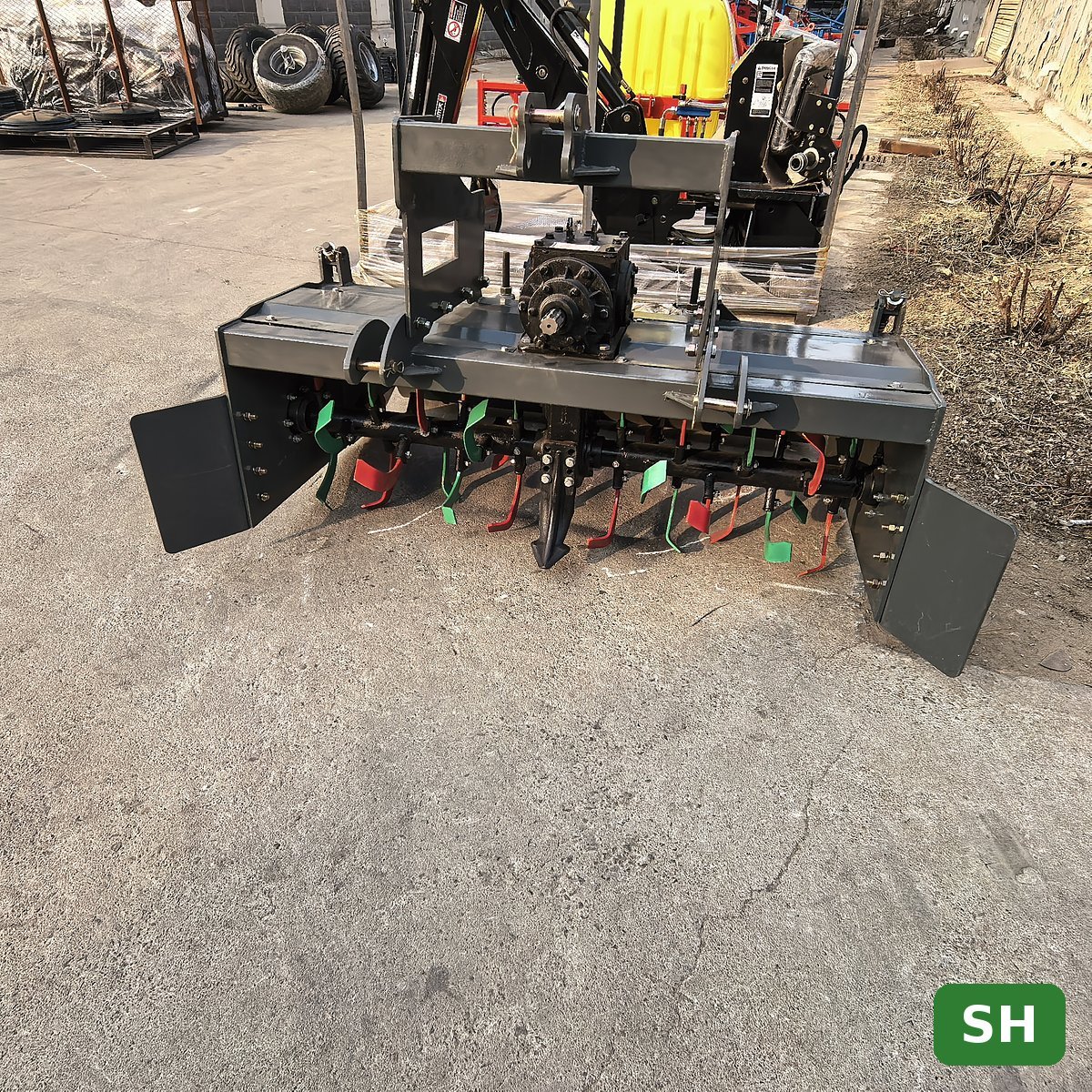
For light and medium soil, small tractors and tight budgets, a centre drive model does the job well. Our rotary tiller buying guide covers width selection in more detail.
Setup and Field Tips
- Level the machine side to side; a side drive unit is heavier on the drive end, so recheck after the first pass.
- Set depth with the skids; start shallow in hard soil.
- Lower the rear shield for a fine surface; raise it for a rougher tilth that resists crusting.
- Drive slower for finer soil and faster for coarser soil and more output.
- Avoid tilling very wet soil, which smears and forms a hard pan. Break an existing pan with a subsoiler every few years.
Maintenance and Spare Parts
- Check the gearbox and side-drive oil levels before each season and after the first 50 hours.
- Grease the PTO shaft joints and rotor bearings every day.
- Replace bent or worn blades in pairs on opposite sides to keep the rotor balanced, and re-tighten blade bolts after the first few hours.
- Order spare blades with the machine so dealers can support their customers.
Common Buying Mistakes
- Buying on width alone. A wide heavy duty rotary tiller overloads a small tractor.
- Wrong PTO. Our models run at 540 r/min; confirm your tractor has a 540 PTO and a suitable shaft.
- Using a tiller instead of a plough on very hard ground. On heavy soil many farmers plough first with a plough, then finish with the tiller.
Why Buy Direct from the Factory
Factory direct means one supplier for tiller, blades and tractor. We offer SH labelling, OEM options and export packing, and ship by sea, rail or air. See our export and shipping page for details.
The FAO’s work on sustainable agricultural mechanization explains why matching equipment to the farm saves fuel and soil.
Side drive or centre drive? Send your tractor HP, rear tyre track and soil type on WhatsApp +86 133 8469 2372 or , or try our selection assistant.
Side Drive Rotary Tiller FAQ
What is the difference between a side drive and center drive rotary tiller?
A centre drive tiller has its drive in the middle of the rotor and can leave a narrow untilled strip. A side drive tiller sends power down one end, so the full width is tilled evenly.
Is a heavy duty rotary tiller better for clay soil?
Usually yes. A heavier frame and side drive work deeper in hard clay. Start shallow, avoid wet clay and make sure your tractor has enough power.
What is the best rotavator for hard soil?
A side drive, heavy duty model handles hard soil best, and fewer blades work better in sticky soil and heavy residue. On very hard ground, plough or subsoil first, then use the rotavator to finish the seedbed.
Is a side gear rotavator the same as a side drive rotary tiller?
Yes. “Rotavator” and “rotary tiller” mean the same machine, and “side gear” describes where the drive sits.
Get a Quote
Tell us the model or type you want (for example R1SH-180 or a side-drive model), quantity, tractor HP, rear tyre track and destination port. We will confirm the fit and send a quotation. Message us on WhatsApp +86 133 8469 2372 or browse all models on our rotary tillers page.
댓글
토론에 참여하려면 로그인해 주세요. 로그인 회원가입