
Rotary Tillage Seeder: Till, Sow and Firm in One Pass
A rotary tillage seeder combines a rotary tiller and a grain seeder in one machine. In a single pass it tills the soil, sows wheat or other grains, and firms the seedbed with a packer roller. For farms that need to plant quickly after harvest, it saves passes, fuel and time. This guide explains how a rotary tillage seeder works, when it pays off and how to set it up.
What Is a Rotary Tillage Seeder?
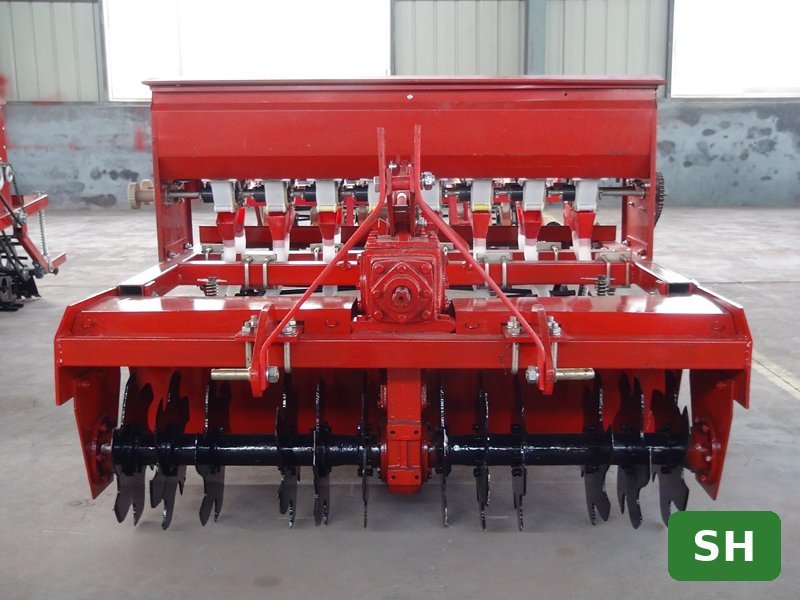
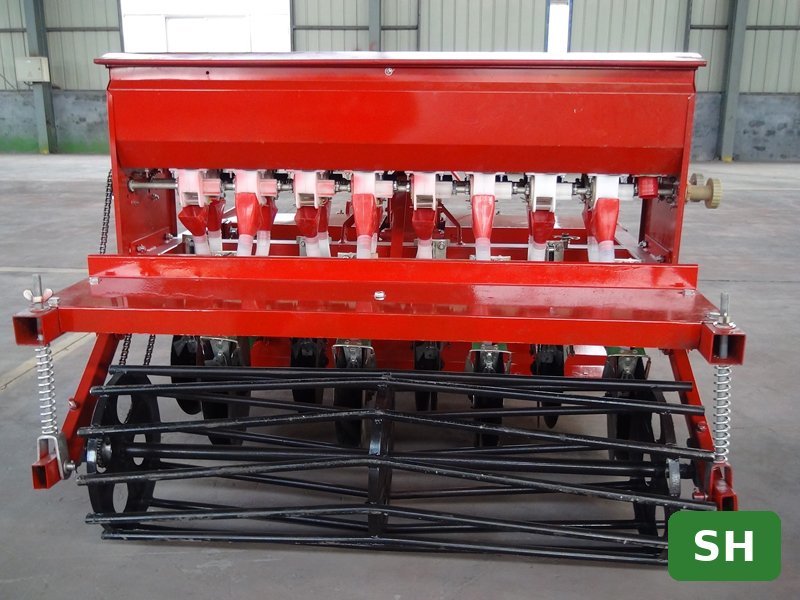
The SH rotary tillage seeder is a three-point mounted, PTO-driven machine. At the front, a rotary tiller rotor with curved blades breaks and mixes the soil. Above it sits a seed box with metering units. Disc openers place the seed in rows, and a packer roller at the rear presses the soil around the seed.
How It Works, Step by Step
- Tilling: the PTO drives the gearbox and rotor. Blades cut, lift and break the soil into a fine tilth, mixing in stubble.
- Metering: seed in the box is measured out by the metering units, so the sowing rate stays even across all rows.
- Sowing: disc openers cut a clean slot and seed falls through the tubes into the loose, moist soil.
- Firming: the packer roller presses the seed into contact with the soil and levels the surface.
Benefits of a Combined Tillage Seeder
- Fewer passes: one trip instead of two or three saves fuel, labour and tractor hours.
- Less compaction: fewer wheel passes keep the soil looser.
- Sowing into moist soil: seed goes in straight after tilling, before the soil dries out – important in dry areas.
- Timeliness: in double-cropping systems, the next crop can be sown the day the previous one is harvested.
When a Separate Tiller and Seeder Is Better
On very heavy, wet clay, or where deep primary tillage is needed, it is often better to plough or disc first, then use the combined machine for the final pass. If you already own a rotary tiller, a separate wheat seeder may also be the cheaper route.
Daily Checks During the Season
Before starting each day, check the gearbox oil level, grease the rotor bearings and PTO shaft, and look for loose or broken tiller blades. Make sure every seed tube is clear and every disc opener turns freely. At the end of the day, clean soil off the packer roller so it rolls evenly the next morning.
Matching the Machine to Your Tractor
A rotary tillage seeder takes power for both the rotor and forward travel, so it needs more horsepower than a seed drill of the same width. As a starting point, use the same guide as for a rotary tiller: around 25–30 hp per metre of working width in medium soil, more in heavy soil. Send us your tractor power and we will recommend a width and give full specifications. Our rotary tiller setup guide covers PTO shaft length and levelling, which apply here too.
Rotary Tiller Seeder Setup and Calibration
- Level the machine side to side and front to back so the rotor and openers work at an even depth.
- Set tillage depth with the skids or the packer roller, usually shallower than for tilling alone – the aim is a fine, firm seedbed.
- Calibrate the seed rate: lift the machine, turn the drive a set number of times, collect and weigh the seed from each tube, and adjust.
- Check sowing depth after the first 20–30 m by digging up a few seeds.
- Keep the seed box clean and dry, and empty it at the end of each day.
Combined, fewer-pass operations are one way farms reduce fuel use and soil disturbance, in line with the FAO’s work on sustainable agricultural mechanization.
Not sure which model fits your tractor? Use our selection assistant, message us on WhatsApp +86 133 8469 2372 or .
FAQ
What crops can a rotary tillage seeder sow?
Like a wheat seeder, it is designed for wheat and other small grains.
Does it need a PTO?
Yes. The tiller rotor is PTO driven, so the tractor needs a PTO and a three-point linkage.
Can I use it in rice or corn stubble?
Yes, the rotor chops and mixes stubble as it tills. Where residue is very heavy, a rotary tiller with stubble cutter may be needed first.
Get a Quote
Send us your tractor HP, crop, field size and destination port. See all models on our rotary tillers page.
Komentar
Silakan masuk untuk ikut berdiskusi. Masuk Daftar