
Boom Sprayer vs Orchard Air-Blast Sprayer: 5 Key Differences
Choosing between a boom sprayer and an orchard air-blast sprayer is one of the first decisions in any crop-protection plan. Both apply herbicides, fungicides, insecticides and liquid fertilizer, but they are built for very different crops. A boom sprayer covers flat field crops in wide, even strips; an air-blast sprayer drives droplets up and into tree canopies. This guide explains five key differences so dealers and farmers can match the right tractor sprayer to each customer, crop and tractor.
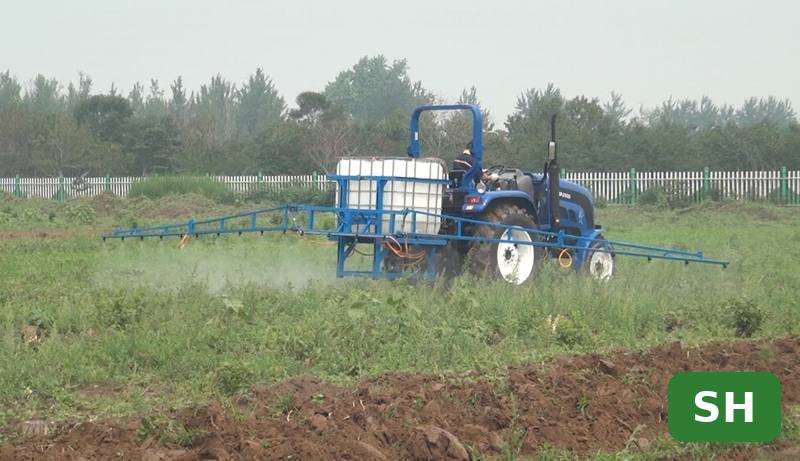
How a Boom Sprayer Works
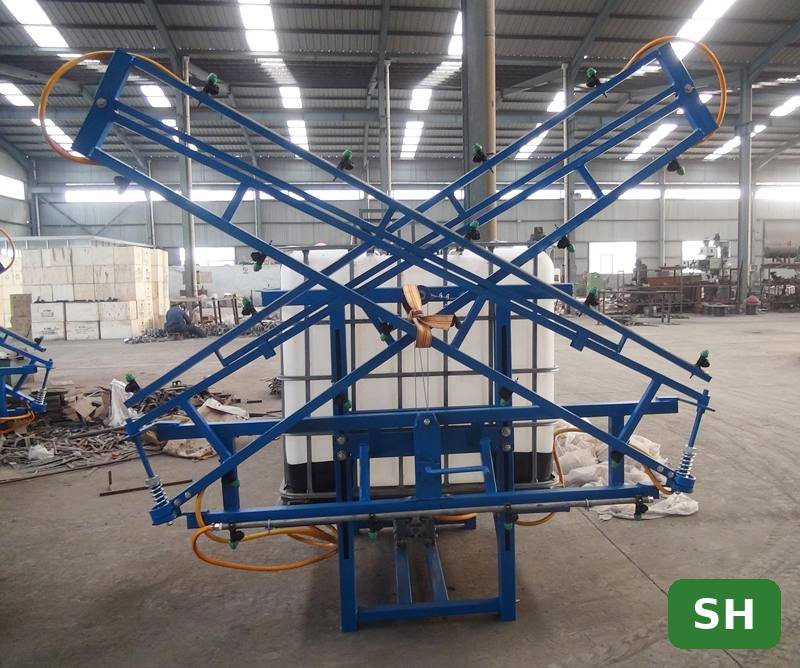
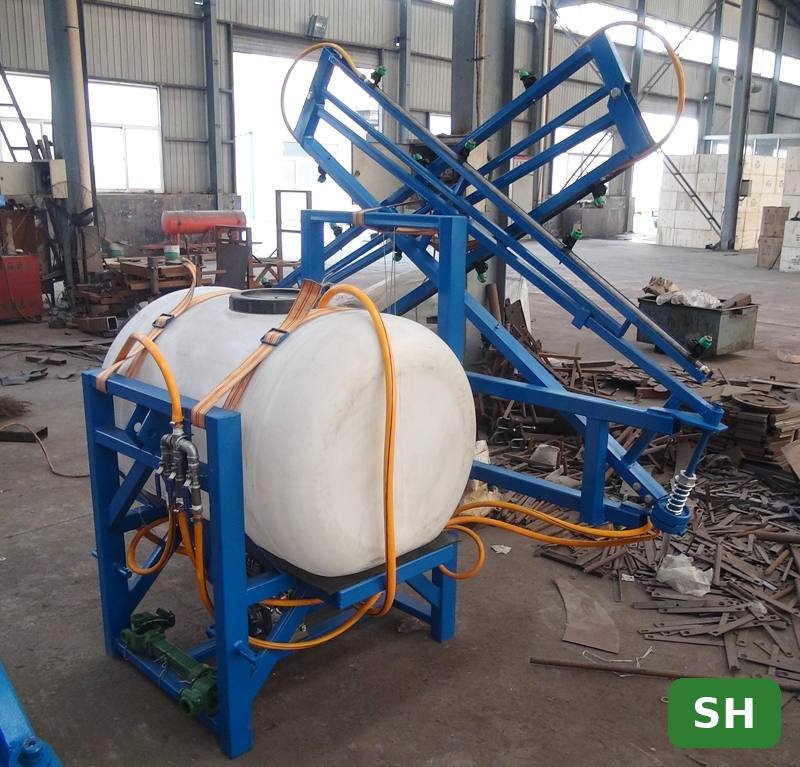
A boom sprayer carries a row of nozzles on a horizontal boom held at a fixed height above the crop. Our P3SH series folding boom sprayers are three-point mounted, with 200–1000 L tanks, 6–10 m spray width, 12–20 nozzles and 8 bar rated pressure. The boom folds for transport and for passing through field gates. A boom sprayer is the standard choice for wheat, corn, soybean, rice, cotton and other field crops.
How an Air-Blast Orchard Sprayer Works
An air-blast sprayer uses a large PTO-driven axial fan. The fan creates an air stream that carries droplets up into the upper branches and deep inside the canopy, where droplets from a simple nozzle would fall short. Our FS3SH series comes with tanks from 300 L up to 2000 L (FS3SH-300 to FS3SH-2000) and is used for apples, citrus, mango, grapes, tea and similar crops.
5 Key Differences at a Glance
- Crop shape: a boom unit suits low, flat crops; an air-blast sprayer suits trees, vines and tall crops.
- Coverage pattern: the boom sprays downward across a 6–10 m strip; the fan throws spray sideways and upward into rows of trees.
- Power need: P3SH boom models match 20–100 hp tractors; air-blast units need enough PTO power to drive the fan.
- Tank range: boom models run from 200 to 1000 L; air-blast models go up to 2000 L for commercial orchards.
- Transport: boom sprayers fold their booms; air-blast units are compact enough to pass between orchard rows.
Sizing a Boom Sprayer to Your Tractor
Each P3SH model has a clear power match:
- P3SH-200 (200 L) and P3SH-300 (300 L): 20–35 hp, 6 m width, 12 nozzles.
- P3SH-400 (400 L): 40–45 hp, 6 m width, 12 nozzles.
- P3SH-500 and P3SH-700: 50–75 hp, 10 m width, 20 nozzles.
- P3SH-800 (75–80 hp) and P3SH-1000 (100 hp): 10 m width, 20 nozzles.
As a general guide, 200–400 L suits small farms and 600–1000 L suits medium farms. On hilly ground, choose a smaller tank for stability. If you need a tractor too, compare our 4WD tractors, or use the selection assistant.
When a Ride-On Sprayer Cart Is Better
Where no tractor can work – inside greenhouses, on narrow vegetable beds and between closely planted rows – a small ride-on sprayer cart is the practical choice. These carts have a petrol engine, a plastic tank and side spray booms. Many vegetable growers run a cart alongside a tractor-mounted unit for their open fields.
Calibration and Safe Use Tips
Whichever sprayer you choose, calibration saves chemicals and protects the crop:
- Fill the tank with clean water and check every nozzle for an even pattern.
- Measure each nozzle’s output for one minute and replace any that are about ten percent above or below the average.
- Measure forward speed and calculate litres per hectare, then adjust pressure or speed to hit the label rate.
- Keep the boom about 50 cm above the crop for flat-fan nozzles, and spray in calm weather.
- Wear gloves, a mask and protective clothing, and rinse the tank and lines after use.
Correct application is part of sustainable agricultural mechanization. Spraying works best as part of a full crop-care line with seeders and row cultivators for mechanical weed control.
Related guide: Boom Sprayer for Tractor: 7 Sizes from 200 to 1000 L and How to Choose
Related guide: Orchard sprayer guide: 7 air blast sizes from 300 to 2000 L
Boom Sprayer FAQ
Can a boom sprayer be used in an orchard?
Only for spraying weeds on the ground between rows. For the tree canopy you need an air-blast sprayer, because the air stream is what carries spray into the upper and inner branches.
What tractor do I need for a 10 m boom sprayer?
The 10 m P3SH models start with the P3SH-500 at 50–55 hp and go up to the P3SH-1000 at 100 hp.
How many nozzles does the boom have?
6 m models have 12 nozzles and 10 m models have 20 nozzles.
What is the best tractor sprayer for a small farm?
For a 20–45 hp tractor, a 200–400 L P3SH model with a 6 m boom and 12 nozzles is usually enough for field crops. For fruit trees, choose an air-blast orchard sprayer instead.
Why choose a folding boom sprayer?
A folding boom sprayer folds its 6–10 m boom for road transport and narrow field gates, so a wide spray width does not make the machine hard to move. All P3SH models have folding booms.
Which orchard sprayer tank size do I need?
Our FS3SH series comes with tanks from 300 L to 2000 L. Small orchards usually start at 300–500 L; commercial orchards choose larger tanks to cut refilling time.
Which nozzles should I use?
Flat-fan nozzles are the usual choice for herbicides on a boom, while hollow-cone nozzles give the finer droplets used for fungicides and insecticides in a canopy. Choose the nozzle size from the target rate in litres per hectare and your forward speed, and replace worn tips every season.
How do I clean the tank after spraying?
Rinse the tank three times with clean water and apply the rinse water to the treated field as the product label allows, then flush the pump, lines and nozzles and clean the filters. Never rinse near wells, rivers or ponds. Store the machine empty and under cover, and drain the pump before frost.
What details do you need for a quotation?
Tell us your crop (field crop, orchard or vineyard), the area, tree row spacing, tractor horsepower and PTO speed, the tank size you prefer, the quantity and the destination port. With these details our team can confirm the right model, suggest spare parts and quote freight by sea or rail. Dealers can mix several sizes in one container to lower the cost per unit. Contact us on WhatsApp.
Get a Quote
Send us your crop, field size and tractor power, and we will recommend the right boom sprayer or air-blast model. See every model on our boom sprayer and orchard sprayer page, and read about export and shipping.
Comments
Please log in to join the discussion. Log in Register